Asphalt Driveway Cost and 2026 Price Guide per Square Foot
The average cost of an asphalt driveway is $3.50 to $8.00 per square foot in 2026. Tonnage, base depth, and compaction set where a job lands in that range. Mix prices also moved this year. According to U.S. Bureau of Labor Statistics data on FRED, the producer price index for asphalt paving mixtures rose from 419.913 in July 2026 to 441.309 in August 2026, an increase of about 5.1%.
This guide covers tons per job, layer depths, labor, region, repair options, and stamped finishes. Use it to read every bid line and spot weak specs before paving starts.
What Is the Average Asphalt Driveway Cost in 2026?
A new asphalt driveway runs $3.50 to $8.00 per square foot installed in 2026. An 800-square-foot driveway therefore costs $2,800 to $6,400. Three layers drive the total: excavation and grading, crushed stone base, and compacted hot mix asphalt (HMA).
The cost of asphalt driveway work also depends on the type of job. A sealcoat is cheap. A tear-out and rebuild is not. This table shows typical 2026 ranges.
| Project type | Price per sq ft | Total for 800 sq ft |
| Sealcoat only | $0.25 to $0.60 | $200 to $480 |
| Crack repair and patching | $0.75 to $2.00 | $600 to $1,600 |
| Overlay, 1.5 to 2 inches | $2.50 to $4.50 | $2,000 to $3,600 |
| New drive, 2 to 3 inches on a 6-inch base | $3.50 to $6.00 | $2,800 to $4,800 |
| Tear-out and rebuild with drainage fix | $5.50 to $8.00 | $4,400 to $6,400 |
Itemized Breakdown: New Asphalt Driveway Cost Per Square Foot
A new build splits into three line items per square foot:
- Excavation and grading: $0.60 to $1.50
- 6-inch crushed stone base, compacted: $1.00 to $2.25
- 2 to 3 inches of placed HMA: $2.00 to $4.25
Excavation and base work make up about 45% of a new-build price. Mix and paving labor cover the rest. Small jobs sit near the top of each range because plant minimum loads and trucking spread over fewer square feet.
How Many Tons of Asphalt Does a Driveway Need?
A driveway needs about 0.012 tons of asphalt per square foot at 2 inches compacted and 0.018 tons per square foot at 3 inches. Compacted HMA weighs about 145 pounds per cubic foot. That density turns any area and depth into tons.
Owners who ask, “How much does an asphalt driveway cost?” They need to know the tonnage first. Estimators use one formula: area (square feet) × thickness (inches) × 0.006 = tons. Add 5% for waste and uneven grades.
| Driveway size | Area (sq ft) | Tons at 2 in | Tons at 3 in |
| 10 x 30 ft | 300 | 3.6 | 5.4 |
| 12 x 50 ft | 600 | 7.3 | 10.9 |
| 20 x 40 ft | 800 | 9.7 | 14.5 |
| 24 x 60 ft | 1,440 | 17.4 | 26.1 |
Loose mix compacts under the roller. The Ontario Hot Mix Producers Association driveway guide states that compacted thickness is about three-quarters of loose thickness. A crew must rake roughly 2.67 inches (or 2.6 inches) of loose mix to finish at 2 inches.
Delivered HMA often runs $90 to $140 per ton in 2026, depending on plant distance and binder grade. Material is the base of the asphalt cost for a driveway. A 3-inch pavement on 800 square feet needs about 14.5 tons (or 15.22 tons with a 5% waste allowance), so mix alone costs roughly $1,305 to $2,030 (or $1,370 to $2,130 with 5% waste included). Many plants add a minimum-load fee on small orders.
How Delivery Logistics and Tonnage Calculation Errors Inflate Bids?
Trucks and timing matter too. Mix cools during haul, so a long drive from the plant shortens the compaction window. Crews schedule deliveries in sequence for that reason. A late truck leaves a cold joint, and cold joints crack first.
Three tonnage errors inflate bids:
- Using loose thickness as the finished thickness overstates the tons by about one-third.
- Skipping the waste allowance leaves the crew short on the last lift.
- Measuring a curved drive as a rectangle hides 5% to 10% of the area.
What Layers Make Up a Paved Driveway?
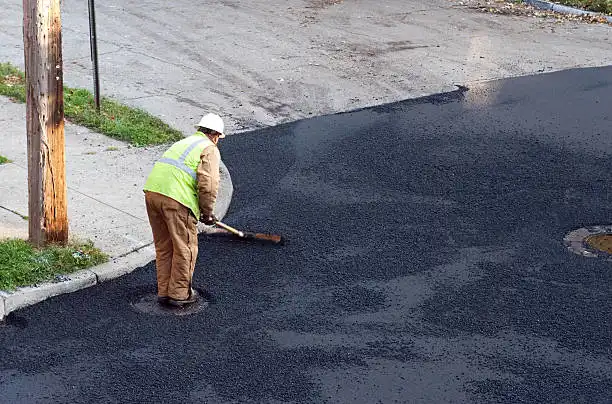
A paved driveway has four working layers: subgrade, crushed stone base, HMA binder course, and HMA surface course. Each layer carries load, sheds water, or protects the layer below it.
Subgrade
The subgrade must be firm, even, and free of topsoil and organic matter. Crews remove soft spots and refill them with compacted crushed stone. Clay and loam need the deepest repair, because they hold water and heave in frost.
Crushed Stone Base
The base spreads wheel loads across the soil. The Ontario guide calls for 6 to 8 inches of compacted crushed granular base in cold climates. Mild climates often use 4 to 6 inches. A thin base cracks first, no matter how thick the asphalt on top is.
Binder and Surface Courses
The same guide sets a minimum of 2 inches of compacted HMA for driveways. A stronger section uses a 2-inch base course topped with a 1.5-inch surface course. Contractors should never lay more than 2 inches of compacted mix in a single lift, because thick lifts compact unevenly.
The extra course explains much of the cost gap in driveway asphalt between thin and heavy-duty sections. Binder grade also matters. Hot climates need stiffer binder, and cold climates need softer binder to resist cracking.
Edge Support
Driveway edges carry wheel loads with no confinement. Crews extend the stone base 6 to 12 inches past the pavement edge and compact it. That shoulder keeps the edge from raveling and sliding. Skipping it saves a few dollars and costs a broken edge within a few winters.
Hot Mix and Warm Mix
Hot mix asphalt leaves the plant at high temperature and must be compacted before it cools. Warm-mix asphalt uses foaming or additives to compact at lower temperatures. That gives crews more working time on long hauls and cool mornings. Both mixes use the same aggregate and binder structure. Ask which plant supplies it, because the mix type affects haul limits and compaction windows.
Slope and Drainage
Water kills pavement from below. Specify a crown-to-edge slope of 1/4 inch per foot. Allow an 18-inch fall per 100 feet of length. Drain water away from the house and off the edge of the pavement.
What Factors Raise or Lower the Price?
Six factors move a paving bid more than any others: thickness, base condition, drainage, access, old pavement removal, and local labor and mix prices. The U.S. Environmental Protection Agency adds region, season, soils, project size, and expected traffic to that list.
Thickness and Lift Count
Each extra inch adds about 0.006 tons per square foot, or $0.55 to $0.85 per square foot at 2026 mix prices. A 3-inch section also needs two lifts if the crew follows the 2-inch lift limit. Two lifts add roller passes and labor time. The cost to asphalt driveway surfaces rises faster than tonnage alone would suggest
Base Condition and Grading
A sound base saves $1.00 to $2.25 per square foot. A failed base costs that much again, plus excavation and hauling. Soft clay can add 2 to 4 inches of stone beyond the plan. Bids should state base depth in inches and the stone type.
Access and Haul Distance
Tight gates, steep grades, and hand-placed mix slow production. Paving machines need room to turn, and crews avoid hand placement when access allows. Plants far from the site raise trucking charges and risk cold mix on arrival.
Old Pavement Removal
Tear-out and disposal add $1.00 to $2.50 per square foot. Milling an old driveway costs less than full removal when the base is sound. Crews often reuse the milled material as base stone.
Region and Season
Labor costs in high-cost metros run well above those in rural areas. High-cost metros often price new drives at $5.50 to $8.00 per square foot. Lower-cost Midwest and Southern markets often land at $3.50 to $5.50. Mix must arrive hot and compact before it cools, so cool-season paving can cost more.
| Market type | Labor and overhead | New drive, price per sq ft |
| High-cost metro (Northeast, West Coast) | High | $5.50 to $8.00 |
| Mid-size city (Midwest, Mountain West) | Moderate | $4.25 to $6.00 |
| Lower-cost South and rural areas | Lower | $3.50 to $5.00 |
Frost depth also changes the spec. Northern jobs need a deeper base stone to resist heave, which adds $0.50 to $1.00 per square foot compared with mild-climate sections.
Permits, Utilities, and Setbacks
Many towns require a driveway permit or apron approval. Permit fees often run $50 to $400. Owners should also call the utility locate line before digging and confirm the property boundary. The Ontario guide warns that skipping a boundary check can result in pavement being placed on a neighbor’s lot. Culvert and curb-cut work adds separate charges, and municipal crews sometimes control that work.
Binder and Mix Price Swings
Asphalt binder comes from petroleum refining, so oil markets move mix prices. The BLS index gain from April to August 2026 shows how fast prices shift. A quote older than 30 days may no longer match plant pricing. Ask for the quote’s expiration date. The asphalt cost driveway owners see in March can differ from what they see in August.
Quotes also vary by contract terms. Some asphalt driveway costs rise after signing when the contract lacks a fixed tonnage and fixed unit price.
Does Thicker Pavement Pay Off Over Time?
Thicker pavement pays off when crews compact it correctly. Thickness without density wastes money. Density controls air voids, and air voids control cracking and rutting.
The Federal Highway Administration reports on this link. According to the FHWA report HIF-19-052, a 1% increase in in-place density, achieved through better compaction, was estimated to extend service life by 10%.
The same FHWA report notes that every participating State averaged at least 94.0% in-place density in one or more test sections. Ask for a density target in the contract. A density test or roller pattern record proves the crew met it.
Life-cycle math makes the point. Divide price by years of service:
- A $3,600 driveway that lasts 15 years costs $240 per year.
- A $4,800 driveway that lasts 25 years costs $192 per year.
- A $4,800 driveway needs sealcoating at $0.25 to $0.60 per square foot every 3 to 5 years to reach that life.
How Does Annual Upkeep Lower Long-Term Asphalt Driveway Costs?
A simple upkeep plan protects the investment:
- Fill cracks wider than 1/4 inch each fall, before freeze-thaw cycles start.
- Sealcoat every 3 to 5 years at $0.25 to $0.60 per square foot.
- Clear drainage paths each spring so water flows away from the edges.
- Patch potholes within weeks, before water softens the base.
Owners who ask how much an asphalt driveway costs per year of service often choose the thicker section. The upfront gap is $1,200, but the yearly price drops by $48 (from $240/yr to $192/yr). Over 25 years, the thin section also needs a rebuild around year 15, so the thicker drive wins on total spend. It also resists rutting under trucks. Treat these figures as an illustration. Local prices and soil conditions affect the result.
How Do Stamped and 20×40 Driveways Price Out?
Stamped asphalt costs about $7 to $14 per square foot, and a 20×40 driveway costs $2,800 to $6,400 for plain pavement. Both prices follow from area, thickness, and finish. This section covers each one.
What Does the Stamped Asphalt Add?
Stamped asphalt driveway cost runs $7 to $14 per square foot installed, about $3 to $6 more than plain asphalt. Crews heat the fresh surface, press a pattern template into it, and compact the template with a plate compactor. A color coating then seals the pattern. The coating wears in 3 to 4 years. Recoating costs $0.75 to $1.50 per square foot.
Color-coated plain asphalt is the cheaper middle path. A seal coat with pigment adds $0.50 to $1.25 per square foot and gives a uniform finish without pattern labor.
Stamped patterns suit aprons, borders, and walkways best. A full stamped surface adds labor and recoat expense that plain pavement avoids. Heavy vehicles can also scuff the pattern at turns.
How Much Does a 20×40 Driveway Cost?
The cost of a 20×40 asphalt driveway ranges from $2,800 to $6,400 for 800 square feet. This size fits a two-car driveway with parking space. A crew of four to six usually finishes the paving in one day, after a day or two of grading and base work. It needs 9.7 tons of mix at 2 inches and 14.5 tons at 3 inches, before the 5% waste allowance.
| Scenario for 800 sq ft | Price per sq ft | Total |
| Overlay, sound base | $3.50 | $2,800 |
| New build, 3 inches on 6-inch base | $5.50 | $4,400 |
| Rebuild with removal and drainage | $8.00 | $6,400 |
| Stamped finish, full surface | $7.00 to $14.00 | $5,600 to $11,200 |
The cost to asphalt a driveway of any size follows one rule: multiply the area by the unit price, then add removal and extras. Use that rule to scale the table above.
How Does Asphalt Compare With Concrete, Gravel, and Pavers?
Asphalt costs less than concrete and pavers and lasts longer than gravel. It also flexes under load and heals small cracks in warm weather, so it handles frost better than rigid slabs.
| Surface | Installed price per sq ft | Typical life | Main upkeep |
| Gravel | $1.00 to $3.00 | 5 to 10 years | Regrade and add stone yearly |
| Asphalt | $3.50 to $8.00 | 15 to 25 years | Sealcoat every 3 to 5 years |
| Concrete | $6.00 to $12.00 | 25 to 40 years | Seal joints, patch spalls |
| Pavers | $12.00 to $30.00 | 30 to 50 years | Re-sand joints, reset stones |
The cost of an asphalt driveway remains lower than that of concrete in most markets, even after sealcoating. The Ontario guide states that a well-designed driveway gives trouble-free service for up to 20 years.
Heat is the main drawback. A pilot study cited by the EPA found that conventional paving, such as asphalt, reached surface temperatures of up to 152°F at midday. Dark pavement also softens in summer. Lighter coatings reduce surface heat, but they increase the price.
Snow melts faster on dark asphalt. Concrete resists heat better, but road salt damages it. Pavers handle both well and are the most expensive. Compare lifespans before you compare prices. The cost of an asphalt driveway per year of service often beats concrete and pavers.
Should You Reseal, Overlay, or Replace?
Reseal when the surface is sound, overlay when the base is sound, and replace when the base has failed. The right choice cuts the price by half or more.
| Option | Best when | Price per sq ft | Added life |
| Crack fill and sealcoat | Hairline cracks, no potholes | $0.25 to $0.60 | 2 to 4 years |
| Overlay | Sound base, surface wear | $2.50 to $4.50 | 8 to 15 years |
| Full replacement | Alligator cracking, soft base | $5.50 to $8.00 | 20 years or more |
Sealcoat only works on sound pavement. It slows oxidation and blocks water, but it cannot bridge deep cracks or fix a weak base. Apply it six to twelve months after paving, then on a three- to five-year cycle.
How Field Tests Determine Overlay vs Replacement Cost?
An overlay needs a clean surface and a tack coat. The tack coat bonds new mix to old pavement. The Ontario guide sets overlay thickness at 1.5 to 2 inches. It also warns that alligator cracking returns in the new layer unless crews repair it first.
The cost of an asphalt driveway overlay drops because the base stays in place. That saves excavation, stone, and hauling.
Use this quick field test before you choose:
- Press a screwdriver into a crack. If it sinks past 1/2 inch, the base is wet or soft.
- Look for alligator cracking. Interlocked cracks mean base failure, not surface wear.
- Check for ponding after rain. Standing water indicates grade problems that an overlay will not fix.
- Measure the existing thickness. Under 2 inches leaves little to mill or bond.
Replace when cracks widen beyond 1/4 inch, potholes recur, or water ponds. Those signs point to base failure. A thin overlay hides the problem for one or two winters. The cost of asphalt driveway replacement is higher because crews now remove two failed layers.
How Can You Lower the Price Without Weakening the Pavement?
Compare bids on identical specs, protect base and compaction, and cut width or decoration first. Never cut stone depth or compacted thickness to save money.
- Match Specifications Across Quotes: The Ontario guide advises at least three quotes with the same quantities and specifications. Confirm each bid states compacted thickness.
- Right-Size Your Driveway Width: A 10-foot-wide driveway over 40 feet long uses 400 square feet. A 12-foot drive uses 480 square feet. The narrower drive saves about 17% of total area.
- Reuse a Sound Existing Base: Milling and overlaying skip excavation and stone, which saves $1.60 to $3.75 per square foot.
- Fix Drainage Issues Early: A $300 to $800 swale or catch basin protects thousands of dollars in pavement.
- Pave During Optimal Weather: The Ontario guide warns that cold mix will not compact properly. Poor compaction cuts service life, as FHWA data shows.
- Sealcoat on Schedule: The asphalt cost for driveway sealcoating, at $0.25 to $0.60 per square foot, is far below overlay prices.
- Split Mobilization Costs: Neighbors who pave on the same day can share equipment delivery and move fees.
- Ask About Recycled Content: Many plants blend reclaimed asphalt pavement (RAP) into mixes where local specs allow it. RAP can trim the per-ton mix price.
- Book Your Contractor Early: Crews fill spring and fall schedules fast. A booked date allows the contractor to order, mix, and schedule trucks, reducing waste.
- Limit Decorative Finishes: Stamp an apron or border instead of the whole surface. The cost of driveway asphalt with a stamped border stays close to the plain price.
The bagged cold patch is suitable only for small potholes. It cannot replace a compacted hot mix over the entire surface.
How Do You Read a Paving Quote Line by Line?
A good paving quote lists area, base depth, compacted thickness, mix type, tons, drainage work, and warranty. Missing lines signal hidden extras.
Check each line against this list:
- Dimensions: Length, width, and total square feet. Rough shapes need a sketch.
- Base: depth (in inches), stone type, and compaction method.
- Pavement: Compacted thickness, number of lifts, and mix designation.
- Quantity: Tons of HMA with the unit price per ton.
- Extras: Fences, lights, wires, and damage to plants. The Ontario guide asks owners to settle who pays for each.
- Contract terms: Start and finish dates, workmanship responsibility, and warranty coverage.
How to Avoid Hidden Extras & Price Your Asphalt Estimate
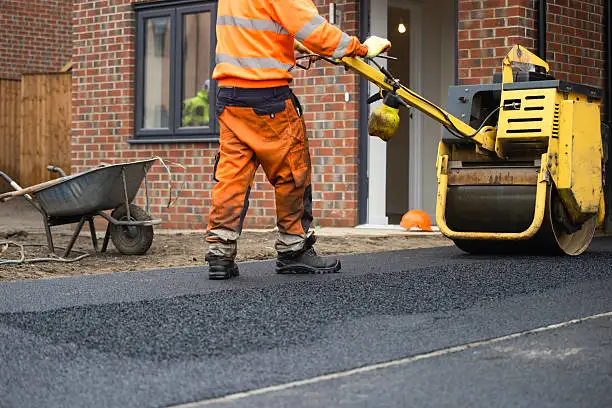
Ask the estimator how much asphalt driveway cost changes if the base grows from 4 to 6 inches. A clear answer shows a priced baseline.
Also ask how much the asphalt driveway drainage work adds, and get the figure in writing.
Watch for these hidden charges. Each one can add hundreds of dollars:
- Short-load or minimum-delivery fees at the plant.
- Extra stone when crews hit soft subgrade.
- Hand-placement labor in tight spots.
- Culvert, curb cut, or apron work.
- Stump, root, or boulder removal.
Prefer unit prices over lump sums. A unit price per ton and per inch of base lets you price changes fairly. If the crew finds soft soil, the added stone has a known rate. A lump sum hides that rate and invites disputes.
The Cost Bidding team builds paving takeoffs the same way: area, depth, tons, then unit price. Contractors who need bid-ready numbers can use paving and asphalt estimating for that process. Related services include quantity takeoff, site work estimating, excavation and earthwork estimating, and construction cost estimating.
Get a Written Paving Estimate Before You Break Ground
A written, line-item estimate protects the budget. The cost of the asphalt driveway you pay depends on the tons of mix, base depth, compacted thickness, and drainage work. Thicker, well-compacted pavement lowers the annual price over time. Stamped finishes and large footprints quickly drive up the upfront cost.
The Cost Bidding company prices paving based on takeoffs, current mix rates, and local labor costs. Compare every bid against the specs in this guide.
Request your accurate paving estimate from Cost Bidding today.
Frequently Asked Questions
How long does a new asphalt driveway last?
A well-built asphalt driveway lasts 15 to 25 years. A solid base, 2 to 3 inches of compacted mix, and sealcoating every three to five years push it toward the high end.
When can you drive on new asphalt?
Walk on it after 24 hours. Park cars after two to three days. In hot weather, wait longer, because soft asphalt can dent under tires, especially when wheels turn in place.
Is 2 inches of asphalt enough for a driveway?
Two compacted inches over a 6-inch stone base suits cars. Trucks and RVs need more. Use a 2-inch base course plus a 1.5-inch surface course for heavier loads and tight turns.
Why do quotes for the same driveway differ?
Bids differ on base depth, compacted versus loose thickness, tonnage, drainage work, and removal. Ask every contractor to quote the same specs. Then compare totals line by line, not by the bottom number.
When should you sealcoat new asphalt?
Wait six to twelve months so the surface oils can cure. Then sealcoat every three to five years. Fill cracks first. Sealcoat on a warm, dry day, and keep cars off it until it cures.