
One of the most widely used blocks in construction is the standard block. Even though you see it being used in almost every residential and commercial building, it’s still necessary to understand where it will be used and then select the appropriate block. The selected block helps to maintain the strength, appearance, cost, and installation speed.
CMU stand for Concrete masonry unit. CMU comes in different sizes, shapes, and designs. Because each type of block has its own purpose to serve. Understanding the use of different CMU block sizes and shapes helps contractors to estimate their budget and profits accurately. It reduces the risk of any material being wasted and any faulty alterations in the project.
What is Standard CMU Size?
When learning about the different sizes and shapes of the block, one must make it clear what the difference is between the nominal and the actual size.
Nominal vs. Actual Dimensions
The actual size is slightly smaller than the nominal one.
For example, a block sold as 8 × 8 × 16 inches, in actuality, the size is about 7⅝ × 7⅝ × 15⅝ inches. The ⅜-inch difference provides enough space for mortar joints. This gap is made to make the wall stand stable when the blocks are stacked together.
Most Common Sizes
The most commonly used block is the 8 × 8 × 16 unit. However, there are many other standard sizes available, which depend upon the project; in which design it is supposed to be used, how much strength is required, and the durability factor. These include;
- 4 × 8 × 16
- 6 × 8 × 16
- 10 × 8 × 16
- 12 × 8 × 16 blocks.
Applications by Size
There are small-thickness blocks as well, and they are being used to support the non-load-bearing partition wall; they are 4 inches. Then we have six-inch blocks that are slightly stronger and can be used in light load-bearing walls. Eight-inch blocks are comparatively stronger and are commonly used in residential and even commercial building construction. Then we have Ten and twelve-inch units where we require even more durability, strength in structures, and sound insulation.
There are specific CMU block sizes that are designed in modular increments, which helps in construction efficiency. Standard dimensions help the builders save time and energy as it requires less time and cutting to fit in the required alignment.
For a comprehensive breakdown of block measurements, please refer to our detailed guide on cinder block sizes here: https://costbidding.com/cinder-block-size/
This article explains standard CMU block sizes, structural shapes, finishes, and how to make the right choice to select a suitable block.
Why CMU Dimensions Matter in Estimation and Planning
CMU dimensions greatly affect the material estimation. If you pay no attention to the actual and nominal sizes of the block and calculate the wall measurement according to the nominal size, it results in chaos and miscalculation, ultimately resulting in profit loss. Even a very small miscalculation can result in ordering extra material or running out of material during construction, both of which can delay the project’s completion time.
CMU block sizes are one of the main factors in calculating the accurate labor and material estimation. If bigger blocks are used, they cover a larger area per block and can be laid in a short period of time. It reduces the labor and material costs.
Contractors who prepare bids need to understand the concrete masonry block dimensions, which improves their accuracy in quantity takeoff estimation.
CMU Shapes and Their Structural Roles
Concrete blocks don’t just come in rectangular shapes but in many different dimensions according to the needs of their use in different designs and models. Each dimension is specifically made to support a specified design and is able to serve the purpose and bear the load.
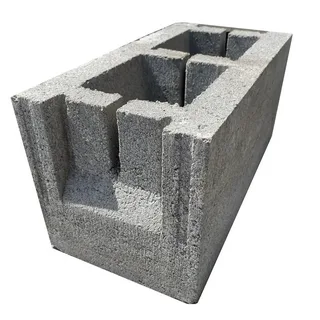
Bond beam blocks
Bond beam blocks have a channel built into them. The channel allows horizontal reinforcement using steel rebar. Once the rebar is placed, grout is poured into the cavity. This creates a strong reinforced beam within the wall. Bond beams help the wall to bear and withstand strong winds and other natural disasters.
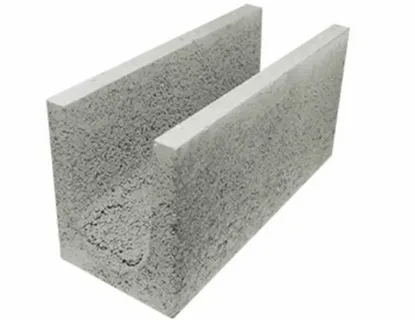
Lintel/U-Blocks
Lintel blocks are also widely known as U-blocks. They are used above the doors and window openings. Their main purpose is to support the load of the masonry above the opening. In order to make it stronger, a steel reinforcement is placed inside the U- shaped space, and the grout is poured to make a strong beam. If you don’t use lintel blocks, you’ll need additional steel support.
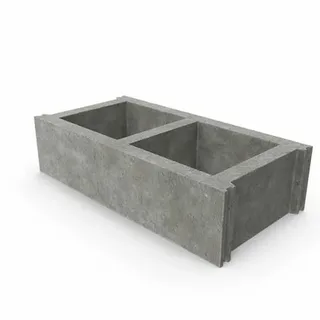
Sash & Corner Blocks
Corner blocks, as the name suggests, are made to prepare the clean and smooth wall edges and give it an aesthetic alignment look. They are made in such a specialized shape that they avoid any kind of irregular and bumpy cutting on-site. Not only the edges, but also when the walls intersect, give a structurally aligned look.
Specialty Shapes
Some projects require special kinds of blocks.
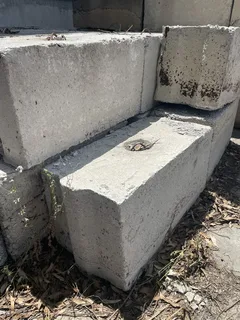
Jumbo blocks
Jumbo blocks are larger in size and cover a large area when placed together; they are commonly used in building the larger walls. It saves time and labor costs.
Split-face corner blocks
Split-face corner blocks are used specifically when there is a need for continuity in texture in the external surface. These are sometimes used in architectural design because there is a greater need for external definition in designs.
Each of the CMU block sizes serves its own purpose, and it is used for different purposes. They ensure the stability of the project structure.
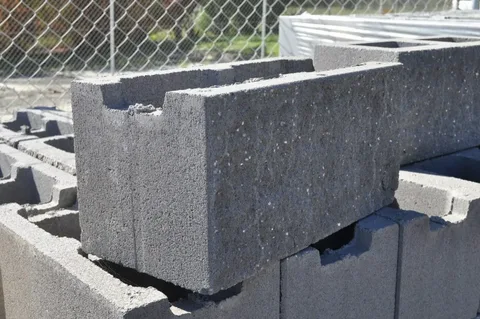
CMU Finishes and Their Impact on Appearance and Durability
Concrete blocks are not only for structuring the building or the wall. They affect the durability and appearance of the building. They are made in different finishes and designs to serve the required purpose and achieve the goal.
Split-face CMUs
Split-face CMUs have a rough and textured surface. They are often used in commercial buildings and for exterior design. The actual purpose of this textured surface is to hide the minor damages and give an aesthetic look. The texture on the split-face blocks also resists the strong weather exposures and minimizes their effect on the external surface.
Burnished/Ground Face CMU
Burnished and ground CMUs have a smooth and clean appearance. These are commonly used in the commercial sectors, schools, and hospitals’ interior spaces. They are stacked as they are made and give a smooth finish without using additional wall covering because of their external polishing appearance.
Glazed CMU
Glazed CMUs have a sealed external surface. They are made this way so they can resist any moisture and chemicals from being absorbed, and also, they are easy to clean. Most often used in hospitals, laboratories, and industrial buildings, as these buildings are exposed to different chemicals, sealed blocks are used so that they remain clean and maintain their integrity irrespective of the external atmosphere.
Decorative/Architectural CMU:
Decorative CMU blocks are made with patterns, custom textures, and pigments. They are specifically used to give the wall or the project an aesthetic look. They are more expensive than the standard blocks, so there’s no need for additional finishing material to look good. They don’t require extra finishing.
You can not use any block anywhere or for any purpose. It’s important to understand where and for what purpose the blocks are going to be used. In this way, it can enhance its strength and visual appeal.
Choosing the Right CMU for Structural Needs
When an individual is trying to select from different CMU sizes, the very first thing they need to consider is the structural requirements. Because the walls that are supposed to bear the load use the thicker blocks, each block size depends upon its usage. An 8-inch unit is used for structuring the external wall, as it’s not meant to bear a lot of weight. At the same time, a 10 or 12-inch unit is used for heavier loads. As for the simple partition walls, 4-inch or 6-inch units are sufficient to use.
There is another factor that plays an important role in the mind when selecting the block. If it is exposed to climate and different weather conditions to deal with, the concrete blocks are suitable. Bond beam blocks and vertical reinforcement bars are mainly specified for increasing stability.
Aesthetic Goals
Nowadays, the external walls are left exposed to the different weather. That means the finishing material matters the most in keeping them looking aesthetic and doesn’t get affected by the external conditions.
For example, in commercial buildings, split-face concrete blocks for external walls are used to give them an aesthetic and textured look.
On the contrary, Burnished blocks are used in the interiors of commercial sites, hospitals, and schools for a smooth finish.
There is also a color option. Pigmented CMU blocks allow architects to use these pigmented blocks to match their designs without using any external finishing, like paint.
The factor of durability must also be considered equally when selecting suitable blocks. If it is going to be used for the external side of the buildings, it will have to bear the weather conditions like rain. Glazed or sealed blocks are used so that they won’t lock in moisture.
Contractors align the structural and visual goals and get a stable, aesthetic, and durable project core.
Material Planning and Quantity Estimation
In order to get an accurate material estimation, contractors need to measure the area first. Here’s a step-by-step process on how to do so:
- Calculate the total wall area by multiplying length by height.
- Determine how many blocks would be used to cover the measured area and which dimension would be suitable.
For example, a standard 8 × 8 × 16 block covers about 0.89 square feet, including mortar. Dividing the total wall area by this coverage provides an estimated block quantity.
- To prevent any delays, always add some extra material in calculations.
Understanding cement block dimensions also helps in planning reinforcement placement. Vertical cores must align properly for rebar installation. Planning can help us avoid errors during construction.
Handling and Installation Considerations
Handling the blocks carefully when construction is ongoing will avoid any loss of material and prevent the stock from running out. CMUs are heavy; a typical block of 8-inch weighs between 30 and 35 pounds. Solid blocks weigh more. Handling them carefully is essential. Also, you must find a suitable place to store and organize them. Reinforced walls are made with proper planning. That means placing steel bars carefully and pouring concrete to make them last longer. The bonding curing time varies depending on the climate. In winter, masonry work needs extra measures to prevent it from freezing.
Cost Versus Long-Term Value
Concrete masonry is one of the most commonly used building materials. These blocks are cheaper, affordable, and widely used.
While other designed blocks are expensive initially, they reduce the cost of finishing later. For example, split-face blocks don’t need any exterior cladding.
Contractors need to keep in mind the material cost and labor required when bidding. Larger blocks cover a larger area and require less installation time as compared to smaller blocks. Reinforced blocks increase durability and reduce future repair costs.
Balancing upfront cost with long-term performance leads to better financial decisions.
Make smarter construction decisions with accurate cost insights. Let our experts help you plan materials and budgets efficiently.
Conclusion
CMU blocks are simple in appearance but are difficult to handle. To get the best cost estimation, visual appeal, durability, and strength, one needs to understand the block’s size, shape, and dimensions first.
Each CMU block size has its own purpose to serve and give the best result in its specific domain. Once done with selecting the proper block, it will help in construction speed and reduce waste while ensuring safety.
It doesn’t matter which field you belong to, whether you are a contractor trying to win a bid or an architect making a design. The accurate knowledge of blocks enhances your confidence.
For a detailed breakdown of measurements and block charts, visit: https://costbidding.com/cinder-block-size/
Frequently Asked Questions
1. What concrete block sizes are commonly used in construction?
When it comes to concrete block sizes, there are multiple choices available for contractors, developers and architects. Some common ones include 4 x 8 x 16, 6 x 8 x 16, 8 x 8 x 16, 10 x 8 x 16, and 12 x 8 x 16 inches. But that’s not the end of it. Based on project design, strength required, and durability factors, there are tons of other standard options available for the construction workers.
2. Which concrete block finish is best for exterior walls?
For exterior walls, constractors prefer split-face or sealed blocks because they are exposed to weather and serve the design purpose as well without any extra finishing.
3. How do I choose the right concrete block size for my project?
It completely depends on the purpose of the walls. Thicker blocks are used by the workers for the walls that are supposed to bear heavy loads, whereas thinner blocks are used for partitions and structured walls.
4. Are CMU block sizes the same as cinder block dimensions?
In most cases, yes. The dimensions are generally similar. However, modern concrete masonry unit sizes are typically made with Portland cement, while traditional cinder blocks were made using coal cinders.
5. Which CMU size is best for load-bearing walls?
6-inch blocks that are slightly stronger and can be used in light load-bearing walls. 8-inch blocks are comparatively stronger and are commonly used in residential and even commercial building construction. Then we have 10 and 12-inch units where we require even more durability, strength in structures, and sound insulation.