Consider a picture. You are standing on a dusty job site. Your team is unloading tools, and you are seeing half-finished framing. Suddenly, you realize that the debris is piling up faster than you planned. If you go with this wrong guess on waste removal, your bid will turn into a loss. And it will definitely affect your profit as you have overlooked the disposal cost. It is where estimating the disposal cost changes the whole game.
In other words, waste looks simple until it hits labor, permits, and disposal lines. So, accurate construction waste planning needs a clear view of the job from day one. When you estimate it right, you protect margin, keep the site moving, and avoid unforeseen expenses later.
In this guide, we’ll break down the numbers, the sizing logic, and the cost drivers that matter on construction jobs. Let’s start!
Average Dumpster Rental Rate in 2026
Most dumpster rental quotes in the U.S. fall inside a broad range, not a fixed number. Currently, prices range from $300 to $800, depending on many factors (will discuss on the same page). Small containers can cost much less, while large ones rise fast with tonnage and haul distance. Similarly, urban sites face higher fees than rural ones.
For bidding, that means you should not chase one average. Instead, build a local range and then apply project-specific adjustments. A tight urban job with heavy debris will never be priced like a suburban clean load. Fuel, landfill distance, and permit pressure all affect the number. So, the safest move is to quote a base allowance, then layer the rest with clear notes. That keeps the haul cost visible before the job starts.
Roll-Off Dumpsters vs. Front-Load
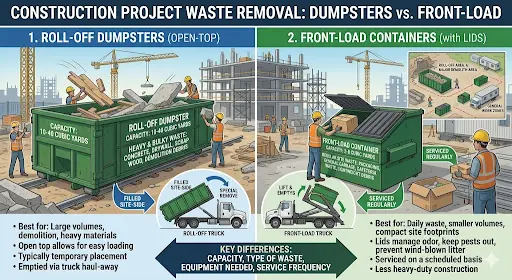
A roll-off dumpster fits construction work because laborers can load it fast, then swap it out when the box fills. However, front-load containers work better for ongoing trash service at businesses, not short bursts of demolition debris.
Knowing that difference matters when you estimate waste flow, access, and haul frequency because the wrong container type can cause project delays.
Which One is the Better Option for Builders? Roll-Off Dumpsters Or Front-Load.
For most builders, the roll-off container becomes the default choice since it handles framing scraps, drywall, flooring, roofing tear-off, and general demo waste well. Front-load bins, by contrast, stay on fixed routes and work best for steady trash pickup. So, for a project-based estimate, the roll-off model usually gives you the cleaner bid and the better site fit.
Win: Roll-Off Dumpsters
What to Include in a Dumpster Rental Estimate?
A reliable estimate leaves nothing blur in the picture. When focus is on the dumpster, it shows the container size, rental period, base haul price, included tonnage, overage rate, delivery & pickup fees, and permit allowance. Plus, it shows call-out prohibited materials, access limits, and any fuel or environmental surcharge. Including all these points in the assessment helps teams avoid conflicts and save time.
Below is the checklist you can use when estimating dumpster cost for a construction project:
- Container size and type
- Delivery date and pickup window
- Rental duration and extension rate
- Included weight or tonnage allowance
- Overage price per ton
- Delivery, pickup, and haul charges
- Permit costs, if the box is placed in public space
- Restricted materials notice
- Fuel or environmental surcharge note
- Tax treatment and final total
When you build this level of detail in your estimates, the quote reads like an actual scope item, and not a guess. That also makes every bid line easier to compare across vendors.
Factors Affecting the Dumpster Rental Rates
Several factors push the dumpster price up or down, and they often combine, increasing the cost of the project significantly. Let’s explore all these affecting factors:
● Dumpster Size
Container size affects both base rate and disposal exposure. Smaller boxes cost less upfront, but they can create extra hauls if the project scope grows. However, bigger boxes cost more at booking, yet they often save money on repeat trips and labor delays.
See details on different sized- dumpster below!
1. 10-Yard Dumpster
A 10-yard box works for small demo loads, concrete chunks, and tight-access jobs. In estimates, it holds roughly 1-2 tons safely. This means that you can save money when the debris is light and compact.
In other words, it is usually the most compact construction option and often carries the lowest entry price. You should use it when the waste volume stays low and the material stays heavy. Simply put, it is a useful size when the job needs control more than capacity.
2. 15-Yard & 20-Yard Dumpsters
PMs often choose a 15-yard dumpster or 20 yard dumpster for typical home additions. These handle roofing or flooring waste without quick overflow. Going in depth, a 15-yard dumpster fits small remodels, kitchen tear-outs and moderate roofing waste and a 20-yard dumpster gives more breathing room for multi-room projects and larger renovation cycles.
These 2 sizes are often used in the sweet spot for builders who want fewer swaps without paying for oversized capacity. Remember that the right call depends on debris mix, not just volume. For many scopes, the 20-yard dumpster offers the best balance of cost and flexibility.
3. 30-40 Yard Dumpsters
As a contractor, you know that large boxes work best for big demolition, full-scale cleanouts, and bulky construction waste. They cost more, but they reduce service frequency on active sites. That matters when labor time costs more than hauling. Still, large boxes can fail if the material is too heavy for the weight allowance.
So, you should rent larger 30 or 40-yard units for major commercial work as they efficiently manage full-site demolition, but cost more upfront. To stay within your budget, you must estimate it carefully before you commit.
● Site Location
Site location changes everything from delivery difficulty to disposal mileage. Urban streets can trigger permits, parking limits, and tighter placement rules. However, rural jobs can face longer haul distances and 20-yard transportation expenses. Either way, the project location affects the quote.
Pro Tip: Always verify your exact zip code first.
● Rental Duration
Like many builders, you can plan for 7- 14 days as standard. Short rentals usually keep the base price lower, but extensions raise the cost quickly. Extra days, weekend holds, and project delays all add costs. So, you should create the project schedule perfectly since a realistic timeline is cheaper than a rushed extension.
● Project Type
Not every project scope or plan treats waste the same way. Let’s see how!
1. Framing and Rough Carpentry
Framing waste usually looks large before it gets heavy. That makes it common to overestimate the needed size. Still, long truss offcuts and packaging can fill a box fast on active sites. The best estimate ties waste volume to framing sequence, not just square footage.
2. Roofing and Exterior Tear-Off
Roofing debris changes the estimates. Shingles stack up dense and heavy, especially when laborers tear off multiple layers. Thus, roof jobs often need more accurate weight planning than a casual visual estimate suggests. A small mistake here can turn into a big overage charge.
3. Interior Renovation and Finish Work
Interior remodels usually create mixed debris. Drywall, cabinets, flooring, trim, and packaging all show up together. That mix loads efficiently, but it can still surprise you if the demolition phase runs longer than planned. What you need to do is to build extra room into the estimate when the demo scope feels loose.
4. Concrete and Masonry Work
Concrete, brick, and block driveways cost more than many teams expect. These materials fill weight limits before they fill cubic yards. That means the container can look half empty and still come back overweight. Therefore, you should treat dense waste like a separate pricing problem.
● Waste Type
Accurate construction debris estimates are better than mixed or restricted waste. Drywall, lumber, and wood are usually easier to handle than roofing, concrete, or contaminated debris. The cleaner the load, the easier it is to control disposal charges.
Pro Tip: Classify waste for better plans and maximum cost savings!
● Density
Note that the density matters as much as cubic yards. You should evaluate material density before you order. Heavy items fill weight limits fast, even if volume looks small. You measure both volume and weight together.
● Transportation Costs
Haul distance affects fuel burn, driver time, and truck productivity. Trucks burn diesel, and drivers spend hours on the road. Traffic delays and narrow site access also reduce route efficiency. Therefore, you should account for fuel and distance in every quote.
Pro Tip: Compare vendors who serve your area efficiently.
● Disposal Costs
Disposal fees significantly affect contractors’ margins. Loop and fill tipping fees vary by county and by waste stream. Some loads cost almost nothing extra; however, others, especially heavier or mixed loads, cost much more. So, disposal cost should never be considered in a random lump sum.
● Hidden Expenses
Hidden expenses usually appear when the field team and estimating team do not share the same assumptions. This includes:
- Overfilling fees
- Permit charges
- Idle-time fees
- Special handling
- Fuel surcharges
If you ignore them, the bid looks good until the invoice arrives.
How to Estimate the Dumpster Cost?
Follow the steps below to estimate the dumpster cost.
1. Conduct a Waste Audit
Understand the project scope and break the debris into categories: separate framing, drywall, flooring, roofing, and concrete. Then estimate how fast each pile grows.
2. Evaluate Material Density
Volume alone can mislead you. A half-full box of concrete may cost more than a full box of lumber. So, use weight as the second filter. That one practice will catch a lot of wrong assumptions before they hit the budget.
3. Obtain Local Tipping Fees
Call the landfill or transfer station tied to the job area. Ask for rates with separate types and by weight class. Then add haulinstance. This way, you will get a more highly accurate estimate than any national chart can provide.
4. Compare Multiple Vendors
Two quotes can look similar at the top, but can hide many different terms. Therefore, you must compare tonnage limits, overtime pricing, fuel charges, and pickup timing.
Note: The cheapest quote is not always the best one. The cleanest quote usually saves more money in the field.
5. Plan for Permits
Street placement, sidewalk encroachment, and right-of-way use often trigger permits. Some cities make the process easy, while others do not. So, add permit time and permit cost into the estimate so the schedule stays on point.
Note: For the complete house construction cost, see our guide: How Much Does It Cost to Build a House in 2026?
Tips to Save Money on Dumpster Expense
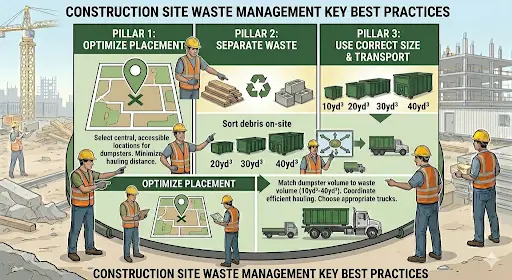
● Optimize Placement
Put the box close to the work zone, but not in the way. Good placement saves labor minutes on every load. It also reduces damage risks and makes pickup easier.
● Separate Waste/Clean Loading
Keep clean material separate from mixed debris whenever the project scope allows it. This will help you reduce contamination and keep disposal options open. It also makes recycling easier, which can improve the overall rate structure.
● Use the Correct Size & Transport
A slightly larger box can be cheaper than 2 smaller boxes. That is especially true on fast-moving construction projects. The trick is knowing when the size jump saves more than it costs, and you can play this trick right with accurate estimates.
Common Mistakes That Increase The Cost of Dumpster
Avoid the following mistakes when estimating the cost of a dumpster.
- Guessing on volume
- Ignoring density
- Forgetting disposal and permit fees.
- Poor communication
Dumpster Waste Management Checklist for Accurate Bidding
- Before you estimate the job, confirm the box size, waste type, access route, haul distance, and likely rental duration.
- Then check permit needs, tonnage allowance, and surcharge triggers.
- Also, confirm the loading plan. Ask who manages separation, where the container will be placed, and who approves extensions.
- Then tie the waste plan back to the bid documents.
Save money and streamline your project waste management! Get expert guidance to choose the right dumpster, avoid costly mistakes, and maximize efficiency.
FAQs
What does a standard quote include?
A standard quote usually includes delivery, pickup, a rental window, and a tonnage allowance.
Why do teams usually pick roll-offs?
Teams need easy loading and quick removal, and a roll-off dumpster gives both. It also works better when debris increases during demolition, rough-in, or finish-out phases. That flexibility helps one keep labor focused on production, not cleanup.
How do fuel surcharges impact the dumpster rental cost?
Fuel surcharges usually rise when diesel prices climb or haul routes get longer. Because truck fleets burn fuel on every pickup and delivery, even small price shifts can change the quote. On a busy job, that extra cost can quietly erode profit.
Right now, U.S. pricing feels tighter because diesel stays elevated and disposal rules stay strict. EIA listed U.S. diesel at $5.53 per gallon on April 2, 2026, which keeps transport pressure real. That makes accurate waste planning more important than ever.
Which construction materials are restricted to manage with a dumpster?
Most haulers restrict hazardous waste, wet paint, solvents, batteries, asbestos, and some chemicals. Many also limit tires, appliances, and electronics. Concrete, wood, drywall, and shingles usually pass, but local rules still control the final call. Therefore, you must always verify before loading.