Are you wondering how many hours it takes to build a concrete block house yourself? If you dream of building your own concrete house, it is not insane. But it is not wrong to say that the task would be highly challenging without professional expertise. Various factors associated with a build can make this task daunting. These factors include the size of your house, design complexity, site conditions, tools, skill levels, and whether you are working on your own or with labour, as well as the tools you have at your disposal. So unlike projects managed by professionals, DIY concrete builds can rely heavily on the most unexpected factor, that is, you.
On average, a full, truancy concrete block home requires around 2000 to 4000 total labour hours. However, with the size of the house, the total hours also change. For instance:
- 800 square feet house: 1800-2400 hours
- 1200 square feet house: 2600-3600 hours
- 2000+ square feet house: 4000-6000+ hours
When we translated the whole work into a complete timeline, the overall timeline for a DIY block house averaged 9 to 12 months.
When it comes to DIY building, people often get confused about its meaning. There is a whole DIY spectrum. Some builders prefer to go solo, meaning embracing the slowest and hands-on way to complete a concrete block, thereby leading to the highest hours.
Some steps into the role of owner-builder, who hire helpers to speed up mixing, stacking, and lifting. In the midst of it, no one can deny the importance of acquiring professional expertise for electrical, plumbing, and structural engineering from certified estimating firms.
In this comprehensive DIY guide, we will break down the realistic labour hour estimates according to construction phases. The blog will also help you plan a safe and efficient build. Let’s turn your concrete home dream into a tangible reality.
If you’re planning your DIY block house project and want accurate material estimates, check out our construction takeoff services.
Pre-Construction and Foundation Time Breakdown
Before building a concrete block house, the following steps: design, planning permits, site preparation, and foundational work should be followed. These steps will build a strong base on which your house will be built.
Design, Planning, and Permits
This is the first and longest stage of building the concrete block house.
While designing the concrete block house, we need to create a layout that shows how the building structure will be built, how it will look from the outside, and what reinforcement should be done. The estimated labour for designing the concrete black hose is 80–200 hours. But if the design is simple, then it will not take as much time as a one-story; likewise, if there are more rooms and more work to do will definitely take more time than the simple one. The proof of owning the land will lie in the documents. The inspections will take time as they require resubmissions or corrections because the local building office will review or approve the plan.
Site Preparation
The estimated labour for the site preparation is 40-80 hours. After your plans are approved, the next step is getting the land ready to build on. Firstly, we will clear the land of anything that will come in the way, it can trees, bushes, or any old structures. Secondly, the marking will be done where the house will sit on the ground. Thirdly, the trenchers will be used; it will take more time than hiring a crew.
The Foundational Work
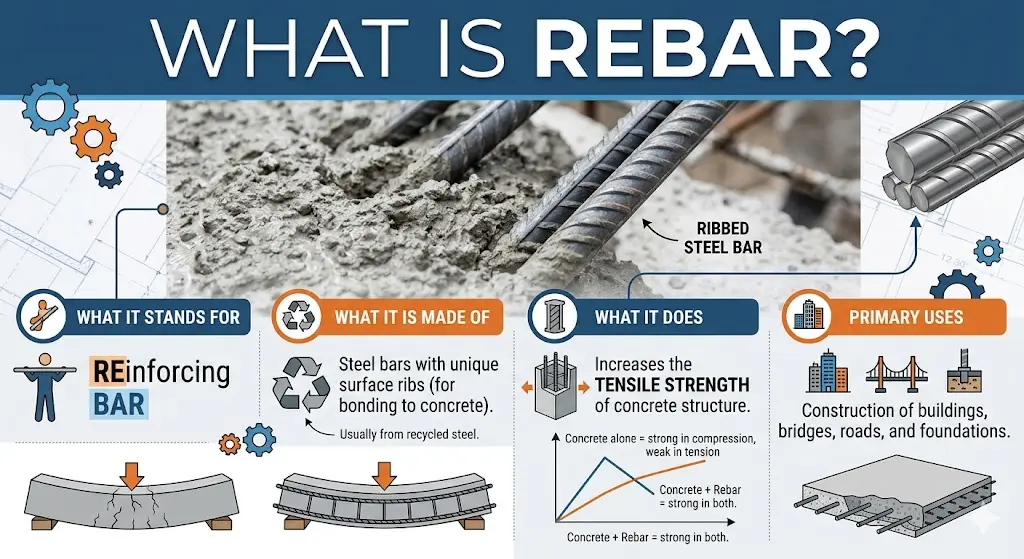
The estimated labour for foundation work is 80–120 hours. After digging the trenches, pour concrete and prepare the foundation. This step will include some heavy-duty tasks. Rebar installation and continuous concrete pouring need extra effort and time. So, make sure you do them accurately on the first try. The work-related tasks would be completed within 50-60 hours. However, the curing process can take 7-10 days for initial strength.
Core Masonry: Estimating Block Laying Hours for the Shell
A. Masonry Efficiency by Skill Level
Most people do not start building a house if they don’t know how to estimate concrete blocks. However, if this is your first task, things don’t look too good for you. Masonry efficiency by skill level also influences the hours. If you are a beginner, you can spend a lot of time on construction. On the contrary, if you are professional and truly understand how to level the walls and handle concrete blocks, you’ll save plenty of your hours yourself.
| Skill Levels | Average blocks per hour |
| Begunner DIYer | 300 – 600 blocks per 8-hour day |
| Experienced | 600 – 800 blocks per 8-hour day |
| Professional Mason | 500 – 1,000 blocks per 8-hour day |
Besides traditional mortar-based block laying, Dry stack has become one of the most widely used alternatives for a cinder block house. Unlike traditional methods, the method relies on mixed mortar to bond individual concrete blocks. The method also allows masons and DIY builders to stack concrete masonry units directly on top of each other without joints of wet mortar. Thereby reducing the lying time. Here is the catch! The alternative method requires surface bonding. It has many benefits:
Faster initial stacking without any maximum delays.
Less cleanup and waste as there is no joint squeezing and falling mortar to manage.
Home builders can benefit from reduced prep cycles
It also includes minimal levelling interruptions.
B. Block Wall Construction Steps
| Construction steps | Task included | Estimated labour hours |
| Mortar Mixing & Prep | Cement: sand ratio measuring (1:4 or 1:6)
Manual or machine mixing Adding water to the required consistency Final slump check |
3-8 hours |
| Staging & Material Layout | Block placement along the wall line
Tool setup, wheelbarrow staging Water and mortar tubs are placed nearby Organising layers for seamless workflow |
2-6 hours |
| Laying the first course | Checking slab/foundation level
Spreading mortar bed Placing the first course Tapping blocks to level Verifying alignment |
5-11 hours |
| Corner Setting & Leads Creation | Setting 4–6 block “leads” at corners
Plumbing (vertical alignment) using a spirit level Ensuring a 90° angle at the edges |
4-7 hours |
| String Line Usage & Row Alignment | Fixing nails/pins at the leads
Running string line for each course Checking alignment per block placement Maintaining straight & uniform rows |
1-3 hours per course |
| Continuing Block Laying | Mortaring head joints & bed joints
Placing each block along the string guide Checking level after every 3–4 blocks Adjusting spacing |
30-50 hours |
| Reinforcement Placement | Measuring and cutting rebar
Placing rods vertically in cores Tying horizontal reinforcement if required |
8-20 hours |
| Grouting (Filling Cores with Grout) | Preparing block core grout mix
Pouring or pumping into cores Rod/vibrate grout for compaction Cleaning spillover |
12-30 hours |
| . Opening Forming | Measuring openings
Cutting blocks were required Installing wooden/metal bucks Securing frames before stacking |
6-12 hours |
| Lintel & Header Installation | Setting steel or concrete lintels
Temporary shoring if needed Mortaring around the lintel edges |
4-10 hours |
| Final Cleanup & Joint Finishing | Brushing mortar joints
Removing excess mortar Surface cleaning before curing |
2-5 hours |
C. Structure and Roof System
The truss Installation requires 80–160 hours. However, the hours also vary based on the roofing materials and installation time. On average, the installation time takes 200-400 hours.
D. The Impact of Crew Size
- DIY Solo Builder: 1000-1200 hours (4-6 months if working evenings/weekends).
- With helpers: between 300 and 450 hours
- 2-Person Crew: 600 – 800 hours
- Professional crew: 200-300 hours
- It takes between 600 and 800 hours to construct a concrete block home on your own or in a group.
Ready to estimate your build? Use these timelines to accurately plan your DIY concrete block house project!
The Finishing Stages: MEP and Interior Labour Breakdown
A. Mechanical, Electrical, and Plumbing (MEP)
Mechanical, Electrical, Plumbing(MEP) includes the installation of a home’s functional systems:
- Mechanical: Things include heating, cooling, and ventilation systems.
- Electrical: The things included are wiring, lights, and switches.
- Plumbing: includes taps, drainage systems, and toilets.
Proper MEP installation ensures your home is safe, convenient, and that functionality is good. The mistakes made in this stage will be expensive.
B. Interior Framing and Finishing
The amount of time taken to make the following design will be determined by the outside of the interior design. Exposed stone, Plaster, and Polished concrete usually take a longer time. On the contrary, Drywall and Stone’s veneer sare faster than the traditional ones. Overall, it takes 80-120 hours to finish the interior design.
- Painting and final finish: 150-400 hours
- Internal doors and trim: 100-300 hours
- Floor installation: 150-400 hours
- Insulation and plaster: 300-600 hours
C. Final Finishes
The final finishes include paint, primer, flooring, doors, skirting, trims, cabinets, countertops, bathroom fixtures, light fittings, and final testing.
Practical DIY Guidance: Tips to Save Time and Avoid Delays
A. Time-Saving Strategies
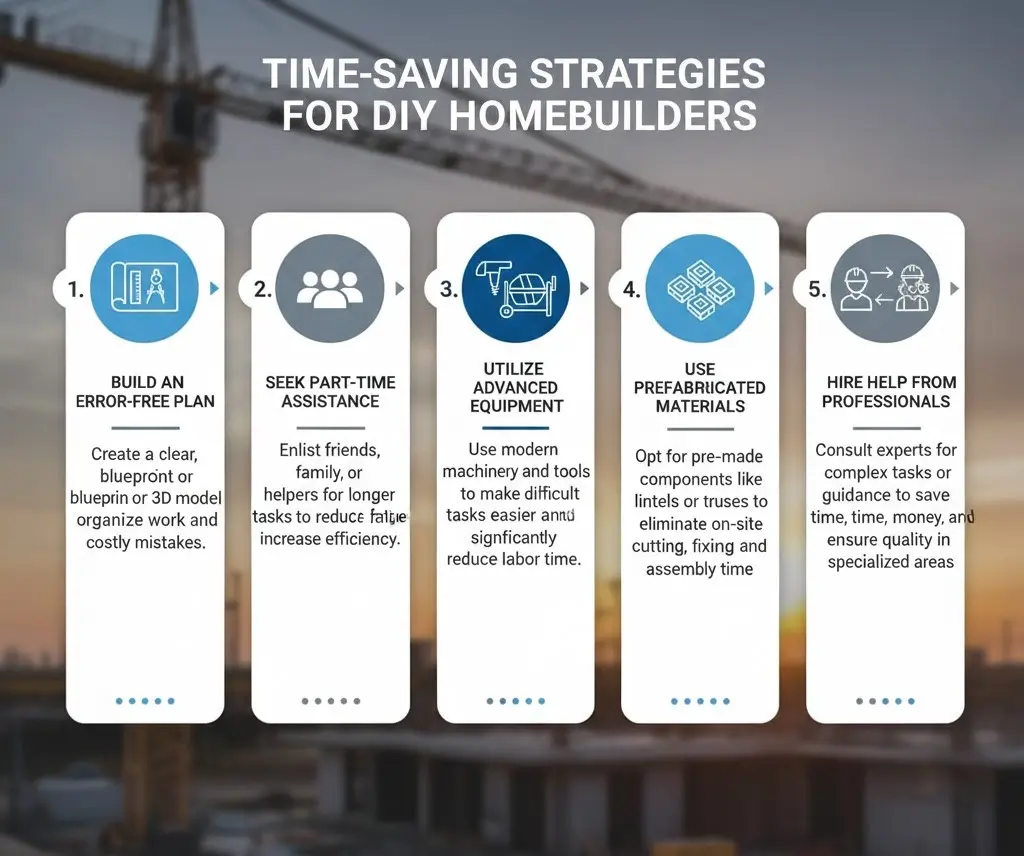
● Build an error-free plan
Make a clear plan to avoid any kind of mistakes. U can map out or make a model before building the house, which will reduce the failure and make the work organised.
● Seek part-time assistance
Ask friends or some helpers for help in longer tasks in which u are facing problems. Having extra people that can be friends, colleagues and family members makes the work go faster, reduces fatigue, and helps prevent mistakes. In this way, the task can be done more efficiently.
● Utilise advanced equipment
U should use advanced and better tools for reducing the risk and making the work easier. Using the machines rather than hand can make work much easier to do and reduce time.
● Use prefabricated materials
The pre-made materials should be used for time-saving and to make the work faster. This will reduce the time for cutting, fixing, reducing, and many other tasks that take much time to do, which can be done with prefabricated materials.
● Hire help from professionals
Some tasks or work require expertise. Hire professionals when needed for difficult tasks and seek help from them for any confusion. It not only saves your time but also saves money.
B. Common Mistakes That Cause Delays
- Due to poor planning, many construction projects get delayed by around 70%. Planning includes a lot of tasks; if any one of them is not done properly so it can create mistakes. Poor planning in the concrete block house development can cause problems with documents and increase the risk of incidents.
- One of the major reasons for facing delays is due to the underestimation of materials needed. You need to plan carefully to make sure that there is enough budget. One of the best ways is to use construction estimation companies. They can guide u on which materials to use and the cost required, and how many hours it will take to build your concrete block house yourself.
- Safety should always come first. Proper safety measures should be taken to avoid using poor or cheap products that will cause damage to your house or cause any damage to life.
- Bad weather causes 45% delays in construction in 2021, and also now. It is the biggest challenge if u are living in humid or rainy areas. U should plan by checking the weather forecast, and if by doing a certain situation occurs so cover the material and certain blocks to keep safe from prevent any kind of damage.
For better budgeting and material planning, you can also read our guide on: estimating construction costs
Conclusion
No one can deny the importance of a concrete house block. If you are worried about how much to build a house yourself, you are at the right platform. If you are looking for a professional company that can help you with DIY house concrete in the construction industry, look no further than Cost Bidding. We help in managing the cost projections and labour hours for your project. For more details, visit our website.
FAQS
How much does it cost to build a concrete block house (total project cost)?
The total cost depends on the house size, its location and design complexity and the materials which are used. The estimated building a concrete block house yourself can range from $50 to $150 per square foot, including materials and tools.
What is the average cost of a concrete block?
Concrete blocks usually cost between $1 and $3 per standard block (8×8×16 inches), based on type, quality of the blocks u choose.
What are the biggest time sinks in building a cinder block house?
Most of the time-consuming parts are:
- Making plans and waiting for their approval.
- The site preparation takes a lot of time by clearing, trenching and marking.
- Some kind of foundational works, where fixing the steel bars and pouring concrete on top and waiting for it to harden.