Last fall, a friend trained for a marathon and tracked everything perfectly. He logged miles, water, and sleep, yet he ignored shoe costs entirely. So, when his shoes wore out early, his budget collapsed. He still finished the race, yet he stressed every step afterward.
Bidding works the same way, even on small bathroom scope items. A vanity looks simple, thus teams throw in a round number quickly. However, one missed line can erase profit on the whole job. That pressure hits hardest at turnover, when owners demand perfection.
Well, this guide treats vanity pricing like you treat structural work. We’ll use 2026 US cost ranges and field realities, ensuring you learn how to scope, price, and compare options with confidence. Let’s start!
What Is a Single Sink Vanity?
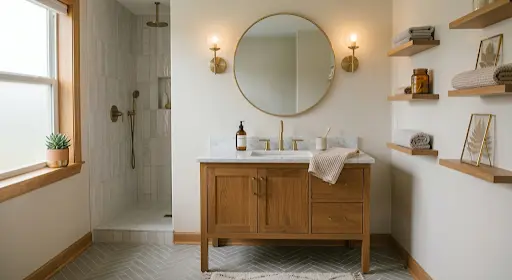
A single sink vanity combines one basin, storage, and countertop workspace. Regarding its cost, you should estimate it as an assembly. Most packages include a cabinet base, a top, a sink, and a faucet. These jobs also need traps, supplies, shutoffs, fasteners, and sealants. Hence, your estimate should list parts and trade touchpoints perfectly. This clarity prevents scope fights between your carpenter and plumber later.
Single vs Double Bathroom Vanity
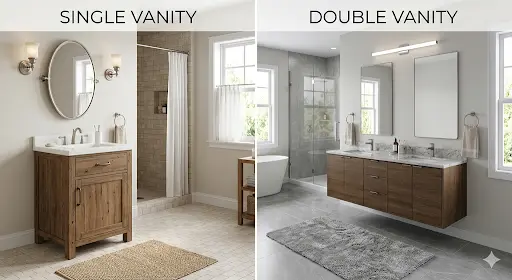
A single sink vanity works best when one user peak drives the bathroom. You can consider it as a powder room, guest baths, and narrow hall bathrooms with tight aisles.
Meanwhile, a double bathroom vanity serves shared routines and busy mornings. It also adds storage and resale appeal when square footage supports it. However, it usually introduces more plumbing labor and coordination risk.
Two basins force extra drains, supplies, and often different rough-in spacing. This way, your team either adds branches or shifts existing centerlines. That move triggers drywall patches, paint touchups, and sometimes floor repairs. Therefore, your bid should carry a clear plumbing changes allowance.According to a study, double vanity installs cost around $1,500 to $3,000. Remember that a double setup can cost roughly twice as much.
Factor in Layout
Layout drives everything; therefore, measure first and sell style second. If clients want 2 users but lack width, consider 2 separate vanities. That split layout can reduce plumbing conflict and simplify mirror planning. However, it can raise millwork costs because you buy 2 cabinet boxes.
Simply put, show pros and cons early, and document the decision clearly.
If you are confused about the decision, you must outsource estimators for plumbing estimating services; they will help you make the best decision, considering your space.
Average Cost of a Single Sink Vanity
Here is a table for better understanding:
| Cost Category | Average Cost |
| Basic vanity replacement | $300 – $800 |
| Standard vanity installation | $800 – $1,500 |
| National average installation | Around $1,500 |
| Typical homeowner spending range | $400 – $2,200 |
| Baseline install estimate | $576 – $871 |
| Labor-only replacement | $665 – $3,300 |
Single Sink Vanity Cost Breakdown
A tight bid breaks vanity work into predictable line items and allowances, so that you reduce surprises and protect margin when clients change project scope.
● Vanity Cabinet Cost
There are two types of vanity cabinets: prefab and custom-built.
| Prefab cabinets | $200–$1,200. |
| Custom cabinets | $1,500–$3,000 |
● Countertop Cost
Overall, countertop costs from $100 to $1,500. For accuracy, their cost depends on the materials you choose:
| Laminate | $50–$300 |
| Granite | $500–$1,500 |
Pro Tip: Confirm depth, backsplash, and faucet-hole drilling before you estimate the project cost.
● Sink and Faucet Cost
These cost from $150 to $700. If you consider premium vessels and faucets, your project cost will automatically increase. Therefore, you should write the fixture allowance with a defined tier and finish family.
● Labor Cost
For a single sink vanity installation, you might have to pay $200 to $1,000. Plumbers often charge $45 to $200 per hour for line work. Hence, price labor by task, then add a plumbing-hours allowance when needed.
● Old Vanity Removal and Disposal
Old unit removal and disposal costs range from $115 to $500 in labor. Heavier stone tops cost more because teams deal with weight and messy debris. What you need to do is to confirm if the client wants you to haul, or just curbside it.
● GC Overhead and Markup
They charge roughly 13% to 22% of the project cost. You should write that markup as a visible line, avoiding hidden expenses.
● Add-Ons That Increase Bathroom Vanity Costs
Small scope changes often break budgets during bathroom upgrades. These may include:
- Plumbing adjustments: $150 to $600
- Electrical work: $100 to $500
- Mirror installation: $80 to $250
- Backsplash installation: $100 to $400
Therefore, include alternates early because these requests usually arrive late.
Cost-Affecting Factors in Bathroom Single Vanity Project
● Size
The size of the project significantly impacts the single sink vanity cost.
| Size | Cost Range |
| 24–30 inches | $300–$900 |
| 36–48 inches | $600–$1,500 |
| 60 inches | $1,200–$2,200 |
● Vanity Type & Style
Different vanity designs change labor demand and wall preparation needs, hence affecting the project cost.
| Vanity Type | Cost Range |
| Freestanding vanity | $300 – $1,200 |
| Floating vanity | $600 – $2,000 |
| Corner vanity | $500 – $1,400 |
| Vessel sink vanity | $700–$2,500 |
| Custom-built-in vanity | $2,000 – $5,500 |
Similarly, the style of vanity affects the cost of the project.
| Vanity Type | Cost Range |
| Shaker vanity | $600–$2,200 |
| Flat-Panel (Slab) vanity | $800–$3,000 |
| Raised Panel (Slab) vanity | $900–$3,500 |
| Furniture Style vanity | $700–$4,000 |
● Material Choice
Material decisions significantly matter in bathrooms. You should focus on moisture resistance before you chase finishes.
- Solid wood lasts longer, yet it costs more and can still move.
- Plywood offers strong value and resists moisture better than particle board.
- MDF paints smoothly, yet it can swell if water sits on the edges.
Therefore, match box material to traffic, ventilation, and cleaning habits. Remember that moisture-resistant materials matter more than appearance in bathroom cabinetry.
Common cabinet box materials include:
- Solid wood (oak, maple, birch): durable but more expensive
- Plywood: strong moisture resistance and balanced cost
- MDF / HDF: smooth finish but sensitive to standing water
- Particle board: budget option with lower durability
Therefore, match cabinet material with bathroom ventilation and daily use.
● Finish Options
Painted, stained, thermofoil, laminate, and natural wood finishes behave differently. Paint adds moisture protection, while thermofoil can peel near heat sources. Thus, consider the finish type in submittals, because it changes warranty performance. Also, finish choices change appearance and long-term maintenance.
Common finish types include:
- Painted finish
- Stained finish
- Thermofoil finish
- Laminate finish
- Natural wood finish
Note: Paint improves moisture protection, while thermofoil may peel near heat.
● Hardware and Storage Upgrades
Hardware and storage upgrades increase the project’s totals. Therefore, you must estimate them as features. Drawer stacks add value, yet they can squeeze drain routing under the bowl. Therefore, confirm the P-trap location before you promise full-depth drawer configurations.
Normally, drawers are added for organizing small items. However, drawers can push you toward semi-custom cabinetry tiers quickly. Therefore, treat drawer-heavy selections as a priced feature in proposals. At this point, lumber takeoff services can help you make the right decision.
Furthermore, door style changes appearance, while construction changes durability: Choose box materials for moisture first.
Time & Cost-Efficient Single Vanity Installation Tips
Most standard installs take 2 to 5 hours in the field. As per a study, a project can take 3 to 6 hours, depending on complexity. This means you must schedule half a day for a clean swap, plus punch time. Then schedule a full day when you expect plumbing moves or wall repairs.
Here’s how you can save time and money, without cutting corners:
● Check Preconstructions
Preconstruction checks help you save real money in construction. You only need to measure rough-ins early, before demolition starts.
How to do that?
- First, verify shutoffs, then confirm you can isolate the bathroom safely.
- Next, measure the drain centerlines from the finished wall and finished floor lines.
- Then, confirm GFCI placement, light clearance, and mirror sizes during walkthroughs.
- Finally, photograph existing conditions early, before demolition starts and dust spreads.
This way, you can avoid scope debates when you discover surprises behind cabinets.
● Sequence Work
It helps avoid rework and callbacks. You level the cabinet, then set the top, then seal, and all set. Here is a detailed workflow:
- Set the cabinet, confirm the level, and secure fasteners before countertop work.
- Then connect drains and supplies, and leak-test before sealing edges.
- Finally, caulk and complete punch items after the plumber signs off.
Doing so will help reduce warranty calls and keep profit as expected.
● Like-for-Like Replacements
Keep footprint and plumbing locations when budgets stay tight. This means keeping the same footprint because flooring adjustments can cost $500 to $1,000. A study notes you can set vanities before flooring to prevent damage.
Also, keep the same drain position because plumbing moves can increase project cost quickly. Similarly, keep trim profiles consistent, so painters avoid endless touchups afterward.
● Watch for Wall Conditions
If the wall condition is critical, it will add labor cost. Therefore, you should plan for scribing on out-of-plumb walls. Out-of-plumb walls force shimming, scribing, and sometimes trim build-outs. In simple words, carry a small carpentry allowance when you see tile waves. Also, confirm stud locations early on floating units during takeoff.
● Treat Moisture Control Early
While doing so, specify sealant and assign warranty responsibility. Even a clean install fails if the caulk joints open and water gets behind them. Hence, specify sealant type and assign responsibility for re-caulking under warranty. That small detail prevents the expensive mystery leak callback later.
How to Choose the Right Vanity for Your Bathroom?
Start with measurements, then storage, then finishes.
1. Measure Your Space First
Measure wall width, door swings, and toilet clearances carefully. Remember that small bathrooms demand tight planning to maintain circulation space.
2. Decide on the Layout of a Single Sink Vanity
A single-wall layout works best in compact bathrooms. It keeps walking space open while maintaining plumbing simplicity.
3. Match Storage to Your Needs
Storage affects daily usability more than appearance. Drawers usually organize small items better than cabinet doors.
4. Pick the Right Countertop Material
Choose countertop materials early because prices vary significantly. Quartz, laminate, and granite all price differently. Remember to choose the right material since this selection affects installation scheduling significantly.
5. Consider Resale Value
Neutral colors and durable materials appeal to future buyers. Simple layouts also increase buyer confidence during resale inspections.
And if you are working on a remodeling project, consider remodeling estimating services for accuracy and precision.
How to Estimate the Cost of a Single Sink Vanity?
Start with scope, then lock quantities, then price labor accurately. This way, you can avoid the small job trap that ruins the bid.
1. Define Project Type and Inclusions.
Consider a simple swap, plumbing changes, remodel, or new build. Then define inclusions like disposal, backsplash, mirror, and electrical alternates. So, your proposal reads like a scope document, and not a sales sheet.
2. Build a material assembly list.
List cabinet, top, sink, faucet, drain kit, and supply lines separately. Then add shims, fasteners, silicone, and touch-up paint allowances carefully.
3. Estimate labor by task and by trade.
Single sink vanity labor installation costs between $200 and $1,000, based on complexity.
Consider the unit cost of the project and then add plumber hours when you move drain lines or supply centers.
4. Add allowances to deal with change orders.
Carry removal labor, often $115 to $500, when the scope includes disposal. Similarly, consider backsplash labor, often $100 to $400, when the wall needs protection. Furthermore, factor in mirror labor, often $80 to $250, when the owner changes the set. Simply put, control project scope daily rather than reacting to it later.
5. Apply overhead, supervision, and contingency.
A study suggests 13% to 22% for GC oversight on supervised work. Also, add a small contingency for hidden wall damage and failed shutoffs. This way, you can stay competitive without sacrificing your profit on hidden conditions.
Quality-Control Checklist for Bid Documents
Confirm…
- Dimensions, plumbing, and electrical needs before estimation.
- Dimensions, depth, height, and clearances before you finalize pricing.
- Plumbing location, especially drain height and supply offsets from the center.
- Electrical needs for outlets, lighting, and mirror accessories are early.
This helps you reduce RFIs and keep the schedule on point.
FAQs
How long does it take to install a single sink bathroom vanity?
Most standard installs take 2 to 4 hours with stable plumbing. However, complex jobs can take most of the day with adjustments.
Do you need to hire a plumber to install a single sink vanity in a bathroom?
Hire a plumber when you shift drain lines or water supply connections. For like-for-like swaps, a skilled installer can manage basic hookups.
Can you change the bathroom vanity without touching the countertop?
You can reuse a top when sizes match, and the slab stays intact. However, most swaps replace tops because of seams, stains, and fit issues.
Why is installing a floating vanity in a bathroom more expensive?
Floating installs require backing, stud anchoring, and precise leveling on finished walls. So, labor needs rise, and teams spend more time protecting wall finishes.
Does location affect the bathroom vanity cost?
Yes, location changes labor rates, scheduling premiums, and material delivery charges. So, always price using local wages, site conditions, and vendor availability.
What is the best bathroom vanity layout for a small bathroom?
A floating vanity often makes small rooms feel larger and easier to clean. Also, a 24–36 inch width keeps circulation clear without sacrificing function.
Conclusion
You can now bid for vanity work with a tighter scope and fewer surprises, as you have the 2026 single sink vanity cost ranges by size, type, and project scenario. You also have line-item costs for cabinets, tops, fixtures, and labor. So, you can write tighter scope notes and reduce change orders.
In short, disciplined estimating turns vanity work into predictable production. Cost Bidding supports contractors with trade takeoffs and bid-ready pricing. We quantify materials, align labor, and document scope to make bids stay consistent. Use our services when bid volume climbs, and your team needs bandwidth.
Share your plans today, and get a bid-ready vanity estimate fast!