Suppose you are standing on the job site with plans in hand, knowing that one material decision will decide your labor hours and profit margin. Therefore, you want to make the right choice between wood and composite decking. In the construction world, contractors become confused between these two types of decking. Knowing each one’s details and the differences between them will help you make the right choice for your project. Let’s start!
What is Wood Decking?
Wood decking is made up of natural lumber boards fastened straight to joists. Teams cut, drill, and secure everything on site. Coming to its function, it delivers that warm and organic look that many of your clients request.
What is the Role of Wood Decking?
- First, it creates the main walking surface on outdoor decks.
- Next, it adds natural texture to backyards and patios.
- Furthermore, it integrates smoothly with railings and stair systems.
- Above all, it frames visible structural elements in traditional builds.
What are the Types of Wood Decking?
There are 4 major types of wood decking commonly used in the US.
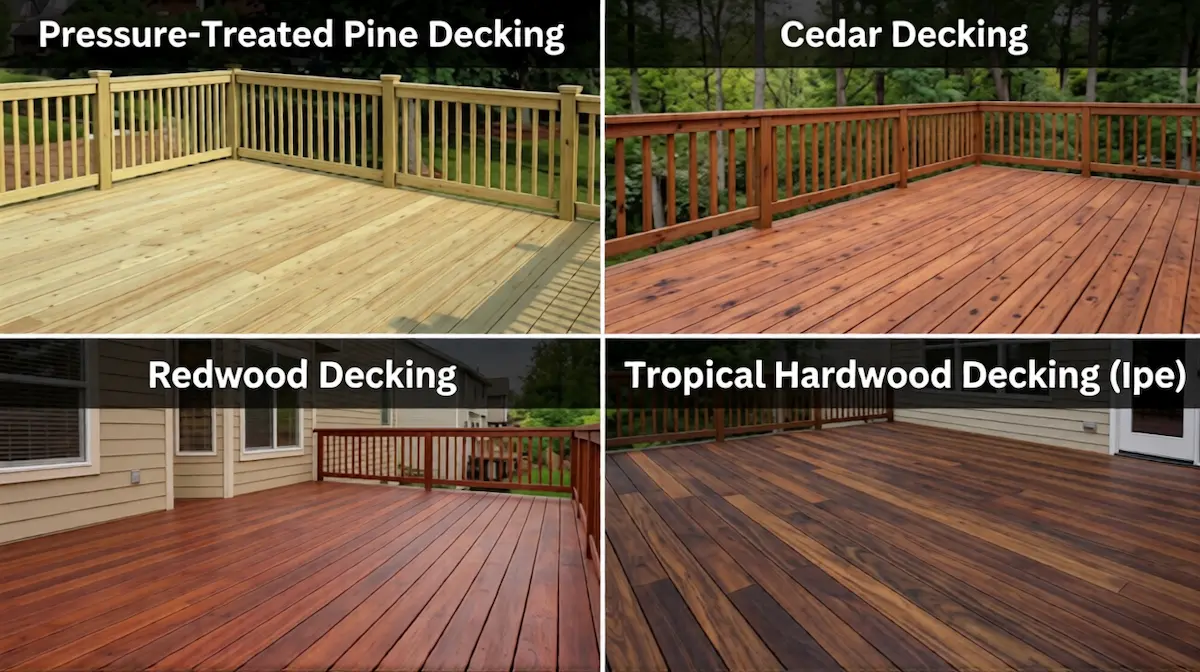
1. Pressure-Treated Pine Decking
Pressure-treated pine usually starts as southern yellow pine. Factories inject chemical preservatives deep into the wood under high pressure. By choosing this, you can get decent rot and insect resistance at the lowest material cost.
Furthermore, boards come standard in 5/4 x 6 sizes and cut fast with basic saws. Plus, you can move them easily because they stay light.
2. Cedar Decking
Western red cedar contains natural oils that fight moisture and bugs without heavy chemicals. It weighs less than pine, so that you can stack and carry loads more quickly. You can pre-drill holes to prevent splitting during fastening when choosing cedar decking for your projects. Color begins reddish-brown and fades to soft silver if left unstained.
Coming to its functioning, it performs well in humid Pacific Northwest or Midwest conditions, but needs sealing every 1–2 years. Its lifespan elongates 15–25 years with consistent care. Scratches appear faster because this wood type is softer than others.
3. Redwood Decking
Redwood heartwood brings rich tones plus strong natural decay resistance. It handles coastal salt air better than most softwoods. Boards resist cupping and stay stable during installation.
Regarding its expense, you will have to pay more than cedar, but see fewer early failures on site. This lasts 20–30 years when maintained properly. Luxury homes in California and the Southwest often feature it.
Pro Tip: Specify clear heartwood grades for premium bids because knots vary.
4. Tropical Hardwood Decking
Ipe, cumaru, garapa (Tropical Hardwoods), and similar exotics deliver extreme density and hardness. Janka rates it top 3,000, far tougher than softwoods. Like many professionals, you can pre-drill every fastener hole and frequently use hidden clips or special screws. Boards feel heavy; therefore, you must plan extra labor time for handling. They treat scratches, dents, and heavy foot traffic for a longer run.
Tropical hardwood lifespan hits 25–40+ years with minimal upkeep. Deep colors weather naturally to silver over time, and price runs highest, yet you can close waterfront and high-end commercial jobs more easily with this option. Some of this wood carries Class A fire ratings that support certain specifications of your projects.
What are the Features of Wood Decking?
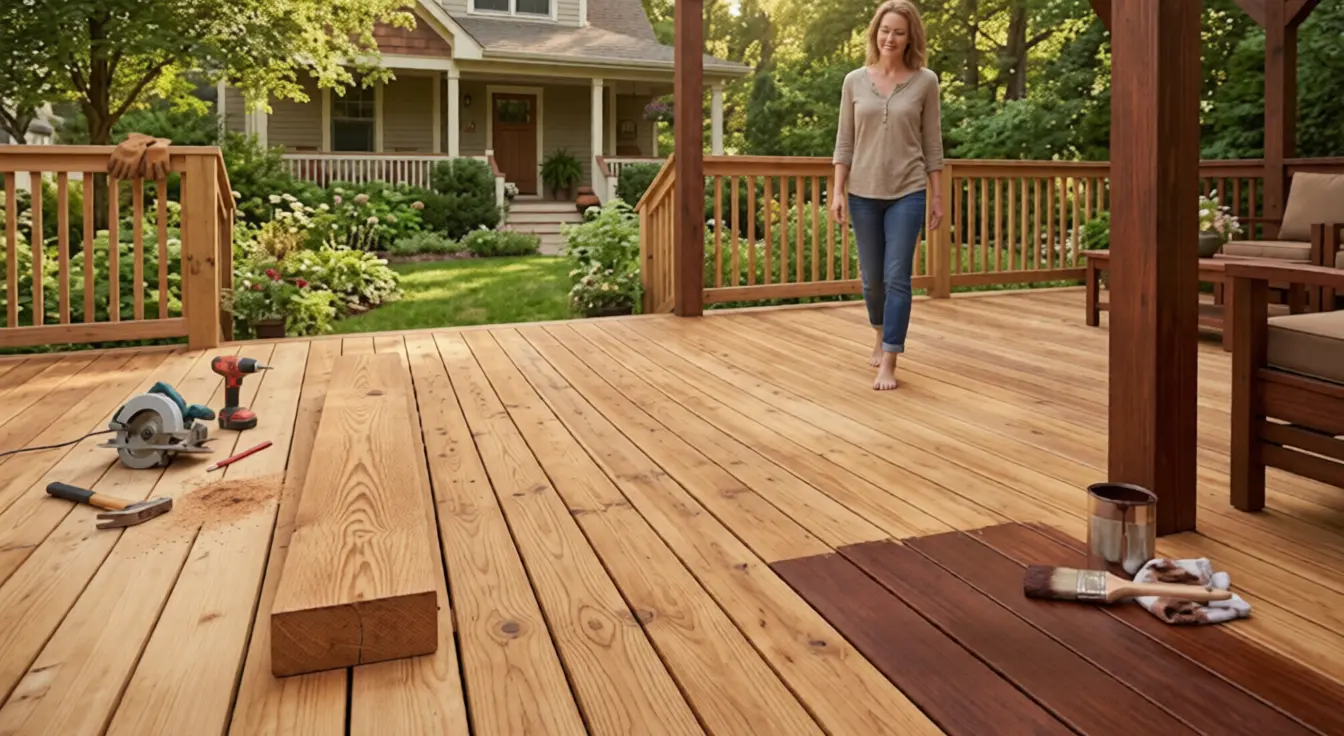
- It shows unique grain patterns in every single board.
- You can cut and fasten it with standard everyday tools.
- It stays cooler under bare feet than many synthetics.
- It accepts stains for exact outdoor color matching.
Pros & Cons of Wood Decking
| Pros | Cons |
| Lower initial material cost | Needs staining every 1–2 years |
| Natural warm appearance | Warps, cracks, and splinters fast |
| Easy to source locally | Attracts insects and rot |
| Familiar to every team | 10–20 years typical lifespan |
What is Composite Decking?
Composite decking blends wood fibers with plastic polymers. Factories extrude boards that mimic wood grain but fight the weather better. Regarding installation, you can rely on many familiar techniques.
What is the Role of Composite Decking?
- First, it builds low-maintenance walking surfaces that last.
- Second, it handles moisture in pool decks and coastal builds.
- Moreover, it keeps a uniform color across larger commercial jobs.
- Most prominently, it slashes long-term callback and warranty issues.
What are the Types of Composite Decking?
There are 2 basic types of composite decking:
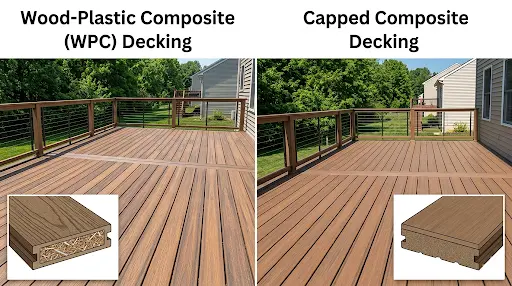
1. Wood-Plastic Composite (WPC) Decking
Basic WPC mixes recycled wood fibers throughout a plastic matrix. You will see it at big-box stores and local lumberyards. It resists moisture better than raw wood but exposes fibers over time. Likewise, fading or staining can appear after several years in harsh sunlight.
Many mid-range residential projects use it for solid everyday value. Installation feels familiar, though the boards weigh noticeably more than pine wood. Furthermore, it lasts 15–25 years, depending on quality and local climate, plus it works best under covered porches or in milder conditions where full exposure is limited.
2. Capped Composite Decking
Capped boards wrap a tough polymer shell around the WPC core. The cap blocks water, UV rays, and stains on three or four sides. Newer formulas include heat-reflective additives that lower surface temperatures. Its four-side capping protects the cut ends from moisture.
Coming to lifespan, its warranties mostly reach 25–50 years on the structure and color fade. Teams install it like wood, but notice the added weight during carry. It performs strongly on open, high-traffic, or harsh-weather decks. Above all, its cleaning is simple with just soap and water.
What are the Features of Composite Decking?
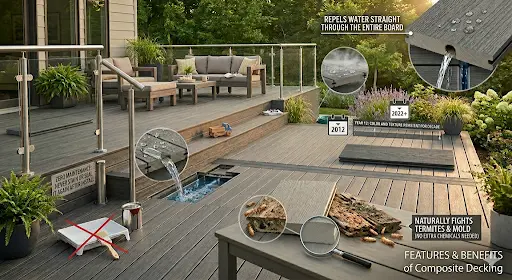
- It repels water straight through the entire board.
- You can never stain or seal it again after install.
- It fights termites and mold without extra chemicals.
- Color and texture remain consistent for decades.
Pros & Cons of Composite Decking
| Pros | Cons |
| 25–50 years expected lifespan | Higher upfront material cost |
| Zero annual staining required | Can heat up in full direct sun |
| No splinters, warping, or rot | Heavier boards slow some labor |
| Simple soap-and-water cleanup | Less natural feel to some clients |
What is the Difference Between Wood & Composite Decking?
| Aspect | Wood Decking | Composite Decking |
| Composition | Natural lumber from trees | Wood fibers inside a plastic shell |
| Moisture control | Absorbs water and rots without care | Fully resistant from day one |
| Maintenance | Stain and seal yearly | Just sweep or wash occasionally |
| Lifespan | 10–20 years typical | 25–50 years with strong warranties |
| Durability | Cracks, splinters, insect damage | Withstands weather and heavy use |
| Aesthetics | Unique natural grain that changes | Consistent color and embossed texture |
| Heat | Stays cooler barefoot | Warmer unless heat-reflective capped |
| Installation | Lighter and very familiar | Similar cuts but heavier boards |
| Sustainability | Renewable yet needs frequent replace | Uses recycled content and lasts longer |
| Wood vs composite decking cost | Cheaper now, costly later | Higher now, cheaper over time |
When to Choose What: Wood Vs Composite Decking
Choose wood decking when:
- The upfront budget is low
- Need authentic aesthetics
- Comfort in heat is focused
- Considering DIY
Choose composite decking when:
- A low-maintenance lifestyle is fine
- Making a long-term investment
- Need resistance to moisture and wetness
- Focusing on constant looks
Tips to Save Maximum on Wood & Composite Decking
Wood decking is cheaper than composite decking, but you can save dollars on both projects with some practical tips.
● Buy Materials in Bulk Early.
Order deck materials, wood or composite, before seasonal price increases. Professionals lock in lower rates and skip rush charges by doing so. You can also account for lumber takeoff services; the experts providing these services will help you keep quantities dead accurate.
● Match Materials to Job Site Needs.
Skip expensive pie on basic rental decks. Make sure to make a durable choice that ensures the safety of the building’s inhabitants at an affordable cost. This way, you can protect your margins without compromising the delivered quality.
● Train Your Team on Fasteners and Techniques.
Wrong screws create hidden failures down the road, and it costs hundreds and thousands of dollars on the job site. Therefore, you must make sure to cut callbacks and protect your reputation by training your team on fasters and installation techniques.
● Factor in Resale and Owner Satisfaction
This saves money during decking by ensuring the investment is durable, brings high ROI, and involves low-maintenance. There will be no premature repairs or replacement costs later. By choosing materials and designs that appeal to future buyers, homeowners often get back 65–85% of the project cost, increasing their satisfaction level, and hence your business, too.
● Outsource Estimating Services
You can focus on landing work and running a smooth team by outsourcing a team for estimation. So, let experts handle deck estimates. This way, you will benefit from experts’ deck estimating services, avoiding underbids and finally impressing your client.
Get professional deck estimating services and start saving on materials today.
Conclusion
Composite vs wood decking is the most trending difference that all contractors ask about. In this page, you have explored each one in detail and have also seen the differences between the two. Next time, if specifications hit your desk, you will decide with clear facts (as discussed on this page).
And if there are still some confusing points, you can contact our consultants for a quick session or even outsource us for takeoff and estimating services. At Cost Bidding, we provide budgeting solutions that help contractors bid smartly and build strongly.
Reach out before your next deadline!
FAQs
What is decking in construction?
Decking forms the surface you walk on. It is placed atop joists in outdoor living spaces.
What is Janka testing?
The Janka hardness test measures a wood species’ resistance to denting, wear, and marring by calculating the force in pounds-force or kilonewtons.
What is composite decking made of?
Composite decking mixes wood fibers with plastic polymers. Manufacturers wrap the core in a tough protective shell when making composite decks.
Is composite decking better than wood?
Composite lasts longer and needs almost zero upkeep. But, wood wins on lower first cost and real grain feel. You must pick the one based on your targeted job scope.
Is composite decking more expensive than wood?
Yes upfront. Yet wood vs composite decking cost balances fast when you add years of staining, repairs, and full replacements.