When a contractor starts estimating a post-frame Morton building project, the first number usually looks fine. But when the site work, concrete, utilities, and finish works show up, every number changes. This is where you understand how important it is to start the building with the right estimates in hand.
In this guide, we will breakdown the cost of a Morton building while considering cost affecting factors, tips to save maximum, a reliable estimating process, and much more. Let’s start with the basic concept of a Morton building!
What are Morton Buildings?
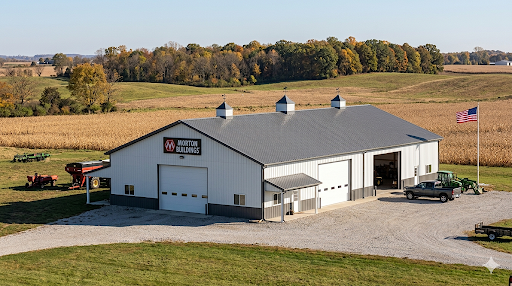
Morton buildings are engineered post-frame structures built with laminated wood columns, steel siding, steel roofing, and custom steel details. Their layout is flexible, the framing is clean, and their exterior usually carries a finished, weather-tight look that holds up well in hard-use settings. Most prominently, these buildings usually rely on repeatable engineered parts, which makes planning easier.
Why are they Getting Popular?
Morton buildings solve a lot of practical problems without making the construction complicated. For example, they…
- Offer wide, open spans with fewer interior load-bearing walls
- Handle garages, workshops, barns, offices, and storage with the same core system
- Often move faster than many traditional custom builds
- Make future expansion easier when the site plan leaves room
- Usually pair well with durable steel exteriors and low-maintenance finishes
Above all, you can start it with a shell, and then add insulation, utilities, and finish work later without tearing the whole plan apart.
Average Morton Building Cost
In 2026, Morton buildings usually fall in a wide range, and the shell-only number is much lower than the fully finished total. See the table below for an understanding of estimates.
| Project Scope | Morton Building Size | Estimated Cost Range |
| Small shell building | 30×40 | $36,000 – $78,000 |
| Mid-size shell building | 40×60 | $72,000 – $156,000 |
| Large shell building | 60×80 | $144,000 – $312,000+ |
| Finished structure | Varies | $50 – $150+ per sq. ft. |
| Custom residential build | Varies | $100 – $200+ per sq. ft. |
The table is showing the big difference between all. Do you know why? Because a shell involves simple jobs, while a finished building carries concrete, insulation, utilities, and interior work. This is where the cost difference jumps in between them.
Morton Building Cost Per Square Foot
It ranges from $30 to $65 per square foot for a shell, and $50 to $150+ per square foot for a finished build. See the table below for more numbers.
| Build Level | Estimate per sq. ft. | Cost Drivers |
| Shell only | $30 – $65 | Frame, siding, roof, doors |
| Shell + slab + insulation | $45 – $90 | Concrete, thermal package, basic upgrades |
| Finished building | $65 – $120 | Electrical, plumbing, HVAC and interior finish |
| Custom home or barndominium | $100 – $200+ | Residential systems and finish work |
Whether you consider the sq ft or the total estimate of the project, both can be affected by some cost drivers.
What Factors Can Affect the Morton Building Cost?
The base shell gives you a starting point, but the real-world estimate changes once design, site, and code enter the picture. Let’s see what factors affect the final cost of the project.
-
Building Size & Height
The building size significantly affects material takeoff, labor hours, and mobilization. Height adds another layer of expense, as you know that taller walls need stronger framing, longer columns, more lift time, and mostly larger doors. A taller building also changes wind load design, so the framing cost usually increases with the height. See the table below for the estimates.
| Footprint | Sidewall Height | Shell Estimated Range |
| 24×30 | 10-12 ft | $21,600 – $46,800 |
| 30×40 | 12-14 ft | $36,000 – $78,000 |
| 40×60 | 14-16 ft | $72,000 – $156,000 |
| 40×80 | 16 ft | $96,000 – $208,000 |
| 60×80 | 16-18 ft | $144,000 – $312,000+ |
Remember that building height changes more than material quantity. It also affects door sizing, prep time, labor safety setup, and, many times, the amount of steel needed for wind or snow design. Furthermore, taller buildings also slow the labor, and that time affects the bid.
-
Morton Building Type
The building type changes the whole cost profile.
- Storage buildings are simple to construct.
- Workshops add utility work.
- Equestrian and commercial buildings need more openings, stronger systems, and more coordination.
- Residential builds stand at the top because they demand comfort, code compliance, and finish quality.
See the table below for Morton building costs, depending on type.
| Morton Building Type | Building Sizes | Estimated Cost Range |
| Farm/agricultural building | 40×60 to 60×120 | $60,000 – $350,000 |
| Garage/workshop | 24×30 to 40×60 | $30,000 – $180,000 |
| Horse barn/equestrian | 36×48 to 60×80 | $75,000 – $300,000 |
| Commercial building | 50×80 to 80×120 | $150,000 – $700,000+ |
| Barndominium/custom home | 1,500 to 4,000+ sq. ft. | $200,000 – $600,000+ |
| RV/boat storage | 30×50 to 50×80 | $45,000 – $250,000 |
-
Geographic Location
Building location matters because labor, freight, permit review, snow load, wind load, and inspection rules all affect the estimates. If you consider national pricing, they will give you only a base estimate. However, with local market data, you can efficiently push the project forward fast, since it gives you in-depth regional cost details.
Additionally, the building cost changes from place to place. When the location is changed, the cost of materials and labor also changes. See the table below for a better understanding of this fluctuation.
| Location | Cost Pressure | Estimated 40×60 Shell |
| California | High | $82,000 – $176,000 |
| Texas | Baseline to moderate | $72,000 – $156,000 |
| Florida | Moderate | $74,000 – $163,000 |
| Alaska | Very high | $90,000 – $205,000 |
| Austin, TX | Slightly above state average | $78,000 – $169,000 |
| Boston, MA | High | $86,000 – $189,000 |
| Washington | Moderate to high | $80,000 – $175,000 |
-
Site Work & Concrete
Many contractors avoid working on sitework plans, but it is something that lays the foundation for cost-efficient building. It decides everything that happens after delivery. Clearing, grading, drainage, base prep, and access all decide whether the build runs smoothly or opposes the ground the whole time. And when there are differences between plans and site conditions, the budget dramatically increases, reducing your margin.
Below is the table showing the cost range of each site work.
| Site Tasks | Cost Range |
| Clearing and rough grading | $1,500 – $8,000 |
| Drive access and equipment pad | $2,500 – $12,000 |
| Drainage and base prep | $2,000 – $10,000 |
| Trenching and spoil removal | $1,500 – $7,500 |
| Concrete slab integration | $6 – $12 per sq. ft. |
Note: If your project needs block curbs, stem walls, or special edge details, review Concrete Block (CMU) Sizes, Shapes, and Finishes before you lock the foundation details.
-
Purpose & Features of a Morton Building
The purpose of the building drives the feature list, and the feature list drives the cost. For example:
- Storage shells need fewer openings and less insulation.
- Workshops need more electrical capacity and better lighting.
- Commercial buildings need stronger code compliance.
- And residential builds (as already mentioned) need comfort, finish, and utility coordination.
Here is the table showing what features and how much they cost to add to the project total.
| Feature | Cost Range |
| Insulation package | $3 – $8 per sq. ft. |
| 10×10 overhead door | $1,500 – $3,000 |
| 14×14 commercial door | $3,000 – $6,000+ |
| Windows | $300 – $1,200 each |
| Interior liner panels | $2 – $5 per sq. ft. |
| Wainscoting or color upgrade | $1,000 – $5,000 |
How to Choose the Features?
Feature selection should follow the building’s job. A farm shell can skip finishes that make sense in a retail space. Similarly, a shop can delay some upgrades until the business grows. This kind of phasing will help you spend smartly.
-
Concrete Slab Cost
The slab is not just a flat pour. However, it supports load, controls drainage, and sets the quality of the finished structure. Thickness, reinforcement, vapor control, and edge details all change the building expense. And a basic slab costs from $6 to $12 per square foot.
Below is the table reflecting the cost range of the slab, depending on the type.
| Slab Type | Cost Range |
| 4-inch light-duty slab | $5 – $8 per sq. ft. |
| 6-inch general-use slab | $6 – $12 per sq. ft. |
| Thickened-edge slab | $8 – $15 per sq. ft. |
| Heavy-duty equipment slab | $10 – $18 per sq. ft. |
If your project is on a 40×80 concrete slab, get How Much Does a 40×80 Concrete Slab Cost in 2026 in detail. It is a useful reference point when you want the slab budget before the shell quote comes.
-
MEP System Integration
As a contractor, you know how MEP systems change a simple building from a structure into a usable area. Plus, you understand that plumbing, electrical, and HVAC systems all need coordination before walls close up. If you ignore them at the early stages, they cost more later. But with MEP estimating services from the experts, you can catch the right size, fixture count, and duct routes before they cost more money than expected.
See the table below for the cost range of each system that is covered under the name of MEP.
| System | Cost Range |
| Plumbing system | $4 – $5+ per sq. ft. |
| Electrical connections | $4 – $9+ per sq. ft. |
| HVAC & ductwork | $1.75 – $2.50 per sq. ft. |
| New ductwork installation | $2,000 – $5,000 |
Note: MEP costs also depend on service distance. A building close to existing utilities usually costs less than one that needs long trench runs or a panel upgrade. Therefore, many rural projects look cheap on paper but cost more when you reach the site.
Is a Morton Building Worth the Cost?
Its answer depends on what value your building brings. Morton buildings commonly bring flawless consistency, precise detailing, and better project control than piecing together a kit and chasing multiple trades. This means reduced conflicts, which is the common issue behind cost increase.
Furthermore, when the shell, labor, and delivery are covered in one pricing structure, comparing options without guessing what’s missing becomes easy. This helps contractors wind up the project on time.
So yes, Morton buildings make sense when it comes to the cost. When you add coordination, rework risk, and durability to the plans, the value shows up. That is especially true for long-term storage, farm use, and buildings that need a clean, finished look.
How to Reduce Morton Building Costs?
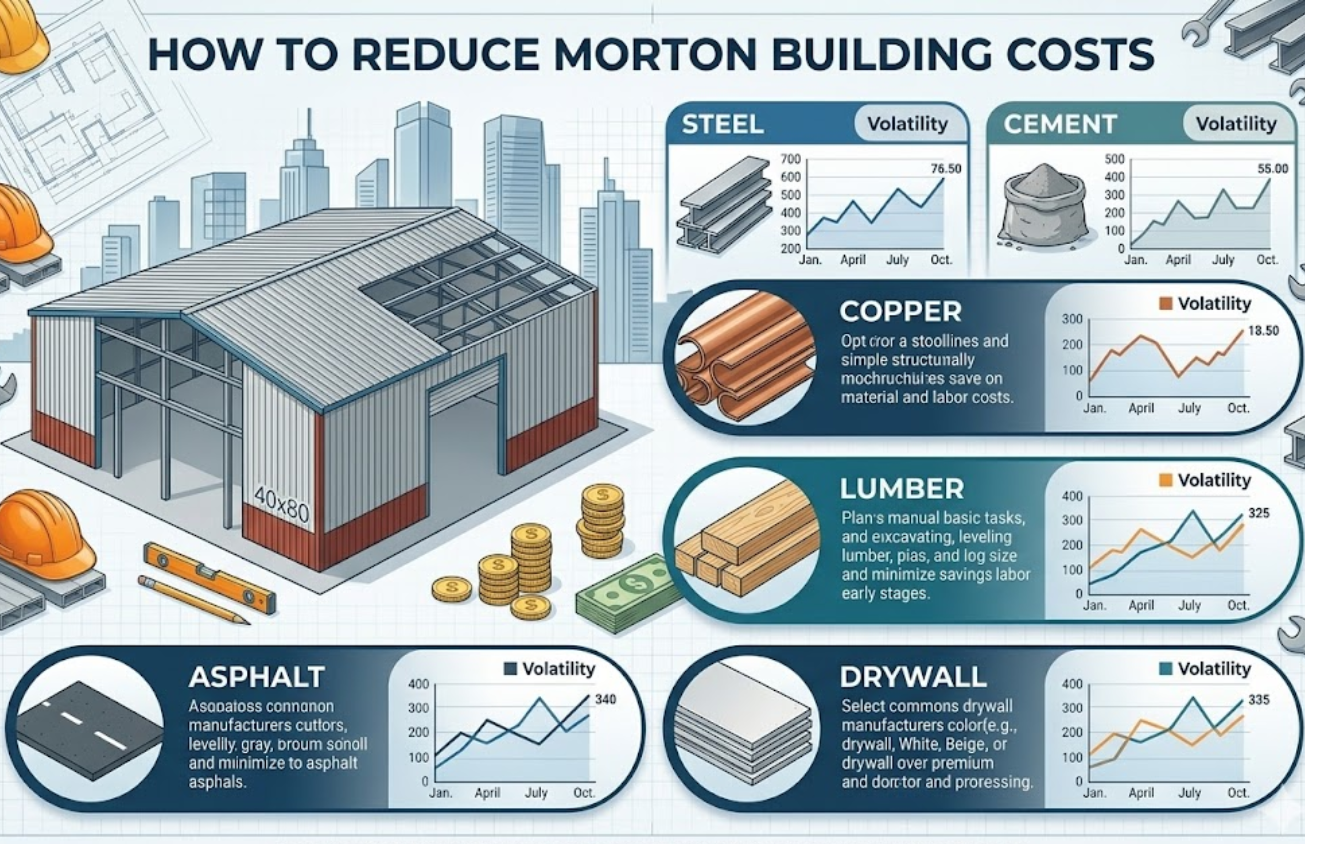
Smart building and budgeting plans can help you achieve this goal. Let’s see how!
-
Choose the Simple Layout.
A precise rectangular shape usually gives the best cost-to-use ratio since it includes fewer corners, which leads to fewer…
- Framing transitions
- Leak points
- Layout issues
A simple A-frame or single-slope shell often delivers the same usable space as a more complicated roofline, but without the premium that comes with custom geometry.
If you can keep the span efficient and the wall lines straight, you can save 5% to 12% on the shell cost. In some projects, those savings come from future-planned insulation upgrades or doors.
Furthermore, a simple plan keeps future maintenance easier. In other words, you can experience fewer roof breaks, valleys, and transitions, which cuts the number of areas where water can be penetrated later.
-
Cut Openings (Windows & Doors).
Every opening, such as doors and windows, adds cost to the project total. It affects framing, trim, flashing, labor, and weatherproofing. A building with fewer openings usually installs faster and leaks less often.
Therefore, experts who provide framing estimating services question every extra door and window before they finalize the budget. Coming to savings, cutting openings enables contractors to save between $2,000 and $10,000 without affecting the Morton building’s core function.
Just make sure to balance access against cost. For example, you can consider a single oversized door that can do the job of two smaller openings without disturbing the function of each. This will give you a sophisticated wall layout, better insulation continuity, and reduced framing interruptions.
-
Ignore Interior Finishing Initially.
It is better to shell first and finish later. This is a perfectly valid strategy when you want to control spending. You can stop at insulation and basic service rough-in while planning to add drywall, trim, ceiling finish, and upgraded flooring later. This will make your project affordable without disturbing its functionality.
Do you know this approach can help save $20 to $60+ per square foot in the first phase, depending on how much finish work you postpone? It also keeps you from paying to finish spaces that may change use later. Regarding its suitability, this phased approach works especially well for farm and shop buildings.
-
Prepare Site Yourself (DIY).
DIY for non-licensed, low-risk tasks. You can handle:
- Debris removal
- Basic clearing
- Simple landscaping
- Some interior prep.
What you can’t do include:
- Grading
- Concrete placement
- Electrical connections
- Plumbing system installation
- Structural assembly
They all belong to experts in most jurisdictions.
How much you save with this approach totally depends on how you handle the particular job. Proper DIY can reduce the cost by a few thousand dollars. However, poor DIY can erase those savings with the need for rework that increases the project cost and timeline. Therefore, you must keep your hands on the safe tasks and leave the code-sensitive work to industry experts.
-
Plan Construction in Off-Season.
Laborers and suppliers stay busier in spring and early summer in the US. Peak spring usually brings the highest demand, so that is the season you must avoid. Trying to plan Morton building construction in the off-season.
When you plan in the off-season, you can save 3% to 8% off labor and mobilization costs. In the US, late fall works well when the weather is dry. Winter is also a good option in mild regions, but concrete and access work get trickier in freezing temperatures.
-
Go with Standard Color Options.
Standard color charts are cheaper than custom mixes or premium two-tone schemes. White, tan, clay, charcoal, and barn red often come under the core pricing range. These colors look sharp on farm, storage, and commercial buildings without pushing the finish cost into custom territory.
Premium colors can add $1,000 to $5,000, especially when they pair with wainscoting or specialty trim. If you want a safe, affordable look, stick with white, light gray, beige, bronze, or charcoal. They age well while keeping the order cleaner.
Standard colors also help with Morton building resale. Buyers usually respond well to clean, familiar tones instead of specialty finishes that feel too personal.
-
Start the Project With Budget Plans.
First, estimate the building cost and then start. It is where contractors see how much they will spend and how much they will make in profit. By having line item details, you can cut what can be shifted to the future and work on the central points of the project. This helps save money that directly adds to the contractor’s profit.
How to Estimate the Morton Building Cost?
Following is the clear process you can follow to have precise and accurate estimates.
Step 1: Define Building Scope & Size.
Start by locking the footprint, wall height, roof pitch, and use category. A 40×60 shop does not price like a 40×60 horse barn, and a low-clearance storage shell does not price like a residential building. This means the more precise the project scope, the more accurate the takeoffs, which means reliable budget plans.
Write the project scope in simple terms since this helps the project owner, the designer, and the estimator stay on the same page. It also keeps the bid from being confusing when somebody adds something new later.
In addition, confirm future use of the building because a shop today may need office space later. If there are chances of that kind of expansion, we must add this in the scope-defining phase.
Step 2: Plan Site Preparation.
Walk the site before you estimate the Morton building. Look at slope, drainage, soil, access, utilities, and where equipment can actually move. Remember that a site that looks easy from the road may need fill, cut, culverts, or haul-off once the grading starts. And they can significantly increase the project total.
Proper site planning also avoids wasted mobilization. If trucks need extra time to reach the pad, the budget loses efficiency fast. Therefore, experts who provide sitework estimating services consider site work in a separate line item in the plan.
Additionally, soil testing is mandatory here, so run it. If the pad is low, drains poorly, or needs long utility runs, your plans should reflect that before anyone assesses the shell cost.
Step 3: Select Building’s Features & Materials.
This is where you turn a shell into a building. Choose insulation, doors, windows, liner panels, finishes, and any special loading requirements. Remember that every choice changes the material takeoff and the labor hours, and that ultimately affects the project total.
It is better to separate must-have features from wish-list features. This split will keep the estimate right and help you manage expenses efficiently.
Step 4: Factor in Location & Codes.
As a contractor, you know that local code demands engineering, and engineering connects to steel. Snow load, wind load, exposure category, seismic rules, and fire separation all change the framing cost. Therefore, you must add them to the plans so you can avoid unforeseen expenses when working on-site.
Permits, plan review, and inspection fees also affect the project total. So do consider local labor rates and material transport. By doing so, you can keep your bid tied to reality instead of a national average that affects the estimates later.
Step 5: Calculate Foundation & Exterior Shell.
Once the site and code are set, estimate the foundation and shell cost together. The foundation affects anchor spacing, wall support, drainage, and concrete volume. And the shell captures framing, roof, siding, and standard doors. When these two points are covered in the same worksheet, the building total becomes more accurate.
Step 6: Estimate Interior Finishing
Don’t forget that interior finish should match the building’s actual use, not a dream version of the use. A basic workshop may only need insulation, service, and washable wall surfaces. However, a commercial or residential project may need drywall, floor systems, cabinetry, and higher-end trim. This shows that different use means different finish strategies.
The reliable estimates separate necessary finish work from optional polish. That way, you can track what the building needs to function and what it needs to impress.
Step 7: Consult a Sales Consultant
Use the consultant conversation to confirm what the quote includes and excludes. Ask about delivery, erection, tax, allowances, slab, utility rough-ins, and any line items that can change later. Make sure that the meeting tightens the estimate, making everything transparent.
Work on the project scope and identify where there are gaps in the plans. That is how you can keep the project from turning into a series of small change orders, which increase the project cost dramatically.
Common Mistakes to Avoid When Estimating Morton Building
Precision and accuracy are essential in each number when you estimate the building cost. And you can achieve this by knowing the common mistakes that many contractors and estimators make. Knowing them better means you can control them better.
-
Ignoring Site Visit
Suppose you are doing estimating on paper while ignoring site visits totally. This means data related to slope, drainage, access points, and soil conditions is not available. Missing this data means you are ignoring haul-off, drainage correction, or equipment access issues that are essential to consider early. Ignoring them will obviously bring them to future changes that cost more than now.
Solution:
Do site visits when required so you can avoid unforeseen expenses later and also keep the project on time.
-
Getting Inaccurate Takeoffs
Inaccurate takeoffs affect everything that follows. If the framing, slab, openings, or finish counts are off, the estimate becomes inaccurate.
Solution:
The fix is simple. Measure twice, verify the drawings, and separate base scope from alternates to have the right material and labor quantities required.
-
Ignoring Addendas
Addendas often hide cost changes in plain sight. A revised detail, note, or specification can change steel, openings, or finish requirements significantly. Contractors who skip addenda end up pricing the wrong version of the project, which ultimately affects the project total and your bid.
Solution:
Factor in an addendum early, so you have the right version of the project cost. This will increase your bid win chances with a good margin.
-
Underestimating the Labor Cost
Labor wages fluctuate with project complexity, location access, weather conditions, and local market pressure. If you price only building materials, the estimate will be off.
Solution:
The best approach is to tie labor to actual site conditions, building height, trade coordination, and the amount of detailing the team has to handle on-site.
-
Ignoring Contingency Funds
You know that soil surprises, utility changes, and permit adjustments can land at any stage of the building. And you can’t ignore these factors, as they are common in almost all construction projects. This is where reliable construction estimate services help you plan ahead and avoid budget gaps. Ignoring them means you are collecting change orders for the future.
Solution:
A reserve of 10% to 15% will help you keep the project from being delayed when the unexpected expenses show up.
FAQs
What is the average Morton building cost per square foot?
Most projects cost around $30 to $65 per square foot for the shell. Finished buildings usually cost from $50 to $150+ per square foot, depending on concrete, insulation, utilities, and interior finish level.
How much does a 40×60 Morton building cost?
A 40×60 Morton building costs $72,000 to $156,000 for the shell. And a more complete version with concrete, insulation, and basic electrical costs between $120,000 and $250,000, depending on location and the project scope.
Are Morton buildings cheaper than metal buildings?
Not always. A bare metal kit can cost less upfront, but the total cost mostly increases once you add erection, concrete, and finish work. Morton buildings usually bundle more of the process, making the final estimate solid and more predictable.
How much does a 40×80 Morton building cost?
A 40×80 metal building costs about $96,000 to $208,000 for the shell, based on current shell pricing. And a finished version can cost much higher once you add slab work, insulation, mechanical systems, and interior features.
What are the alternatives to the Morton building?
Common alternatives include pole barns, kit metal buildings, wood-frame outbuildings, and masonry structures. Each one changes the balance between upfront cost, design flexibility, maintenance, and speed of construction, so the best choice depends on use and budget.
When can you consider alternatives to the Morton building?
Consider alternatives when your budget only supports a shell, when local labor prices run high, or when you need a simpler structure with fewer finish demands. That often makes a kit or pole-frame option easier to control.
Is financing available for Morton Buildings in the US?
Yes. Financing comes through partner lenders, agricultural lenders, construction loans, or home-equity options. Note that terms depend on credit, project type, and local lending standards, so owners should compare the payment structure before signing.
How long is the lifespan of the Morton building?
A well-kept Morton building can last for decades, and many owners treat it as a long-term asset. The lifespan depends on maintenance, exposure, drainage, and finish quality, but the structure is built for long service.
Conclusion
Morton buildings can work well when you need strength, flexibility, and a clear path from shell to finish. Its price changes with size, height, location, site work, concrete, and mechanical systems. With the smartest budget plan, you can start with a clear work scope and a realistic allowance structure.
If you want an almost 100% accurate estimate, the project should move through Morton Building estimating services before contracts get locked. That is where Cost Bidding helps most; the team turns rough ideas into a buildable budget plan.
Reach out today for the most reliable estimate now!