
A running toilet is a common issue, and most of the time, it gets ignored. Ignoring this problem in its early stages can lead to secondary damage. Homeowners don’t pay attention to it because the toilet is still functioning. But over time, that small issue can cause bigger trouble.
Understanding the flushing system and its components can help an individual to fix the issue on their own without needing assistance from a professional. Fixing or replacing the damaged component is not complicated and can be done quickly and on a low budget. The components are affordable and easily available in the market, which makes the repair process simple and cost-effective for the homeowners.
In 2026, despite advanced structures and modern designs, the basics of the flushing system are the same. Understanding that mechanism can help resolve any issue in no time.
To better understand plumbing systems and overall repair costs, check out our detailed guide on how much plumbing costs
Why Your Toilet Keeps Running
It happens when the water continuously runs into the bowl and doesn’t get stored. The continuous leak disrupts the water storage cycle, resulting in more utility bills. It should be repaired as soon as possible.
Issues in the Flushing System Components
When people notice that there is an issue in the flushing system, it is because one or two components of the flushing system don’t work properly or are damaged. This issue happens when there’s an issue with the valve, flapper, or float.
How the Flushing Mechanism Works
First of all, one needs to understand how the system and its components function. Once understood, you can identify what needs to be fixed. When you flush the toilet, the flapper moves and allows the water to flow into the bowl. It gets back to its position and tightly seals the flush valve so that water doesn’t leak into the bowl, and the fill valve keeps refilling the water. Having an issue in this component causes water to flow into the bowl incessantly.
Another reason can also be the incorrect water levels in the float. If it is set too high, then water keeps on overflowing into the tube. Sometimes, it happens when the parts are damaged or blocked, or there is an abnormality in the functions of the flushing system.
Common Causes of a Running Toilet
Understanding the basics of the flushing system will help you fix the minor troubles on your own without any professional help. When you notice a toilet won’t stop running, there can be multiple reasons behind it. Only a person who has knowledge of the system can detect and fix it. It mainly happens when there is an issue with the flapper or valve. There can also be any internal issue in a few cases. All the components work together to make the water flow system work smoothly. When one of the elements gets damaged and doesn’t work properly, it starts to cause trouble in the whole system and becomes a cause for continuous water loss.
Faulty or Worn-Out Flapper Valve
A flapper is a flexible rubber seal and is used to control the water overflow into the bowl. It is located at the bottom of the tank. When the handle is pressed, the rubber seal lifts up and gives way to the water to flow into the bowl. Once the handle is released, the seal returns to its previous position, creating a seal that prevents water from flowing into the bowl. But with time, the flapper can become hard, not in its shape, or might be covered with mineral deposits that make it look irregular and leave the space for the water to flow even when it’s closed. This continuous leaking of water into the bowl forces the water to be filled into the tank, and this cycle continues until the part is replaced.
Malfunctioning Fill Valve System
The fill valve is responsible for refilling the tank after every flush. The water begins refilling as soon as the tank is emptied and stops filling when the water reaches a certain level inside the tank. Toilet running can occur when the flapper is faulty, forcing the valve to refill. Sometimes it even makes a hissing sound, which means there is an issue in this component and needs to be fixed. Most of the time, when the valve gets damaged and doesn’t close properly, it also becomes the reason for water wastage and increases the utility bills. A small issue like a damaged valve, if not fixed on time, can result in getting higher bills, which would be much higher than the actual price of the valve.
Incorrect Float Level or Float Damage
This acts as a signal bridge between the water level and the valve. As soon as it detects that the water is below the adjusted water level or reaches the correct water level. It signals the valve to start to refill the water or stop refilling, respectively. When there is damage to the float, the tank remains empty when needed. As tank refilling takes time, all you can do is stand there and wait for it. Conversely, a damaged detector may cause it to keep refilling because the detector is damaged, and the valve doesn’t know when to start refilling and stops when the task is done.
This affects the shut-off mechanism and leads to continuous water loss.
Chain and Flush Lever Issues
The chain is what connects the flush handle with the flapper during flushing. There can be two cases in it, one is when the chain is too tight and leaves the flapper open, preventing the flapper from sealing tightly, which will lead to water loss and a continuous water refilling cycle. The other one is when the chain is too loose, it won’t let the flapper open properly, hindering the water flow, affecting proper flushing. Both of the cases are frustrating, and to ensure proper operation, the chain length must be balanced. Another reason is that when there is a problem with the flush lever, such as stiffness or misalignment, it can also affect how the flapper operates and cause trouble if it does not work properly.
Mineral Buildup and Debris Inside the Tank
There are areas where people don’t have access to the soft water. All they get is the hard water that is full of minerals. When that hard water is continuously filled in the tank, the minerals from the water start to deposit inside the tank along with every component of it and affect their functioning by blocking the way or covering the parts and making them lose their shape. For example, when mineral layer buildup occurs around the flapper, it will not allow the rubber seal to block the water flow hole tightly, and cause water leakage continuously.
Cracks or Damage in Tank Components
This issue is not very common, as all the components are well protected inside the structure to get damaged easily, but still, if any of the parts get damaged, it can also cause continuous refilling of the tank. It is quite hard for the person who is new to this mechanism to detect the issue, but in these cases, either the damaged part or the complete internal mechanism needs to be replaced with a new one to fix the issue.
For a deeper understanding of plumbing systems and installation stages, you can also read our guide on what is rough-in plumbing
How to Fix a Running Toilet Step by Step
A running toilet can be fixed using basic tools and an understanding of the components used in the flushing system. One must know the function of each part so that it becomes easy for them to detect which part is causing trouble, which part needs to be replaced, and how.
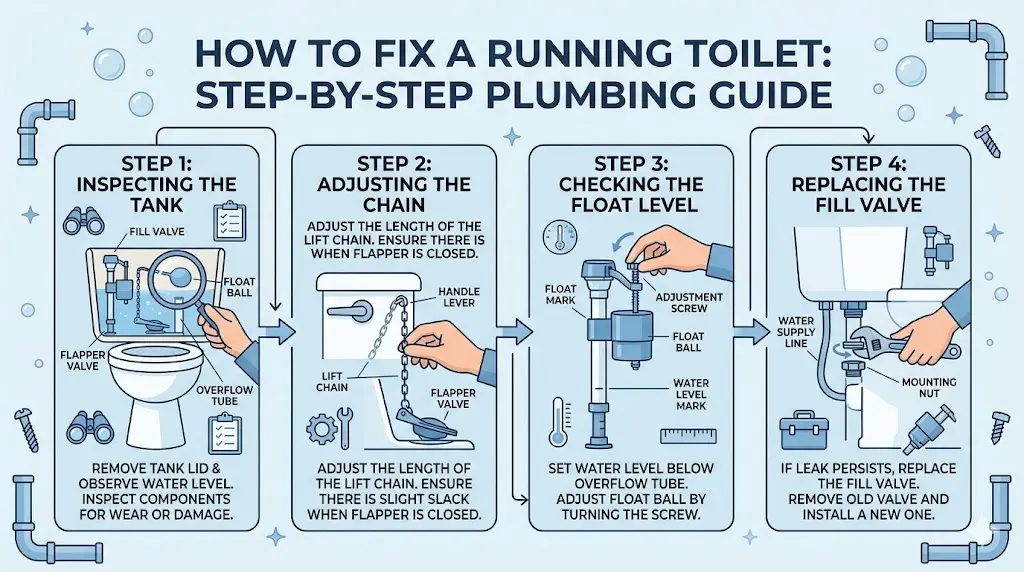
Open the Tank and Inspect Components
The very first step is to remove the tank lid, then examine every part closely, see when the tank gets empty, and whether the flapper is sealing the way tightly or not, or if there is any leakage. If that works perfectly, then there must be some issue in the other part.
Check and Adjust the Chain Length
Next, look at the length of the chain that connects the flush handle to the flapper. Whether the length is short or long, it causes trouble either way, allowing water to flow continuously or stopping the water path. Adjust or replace the chain to resolve the issue.
Inspect the Float and Water Level
You can also check the level of the float if it’s too high, and allow water to overflow into the tube; this is a common cause of water loss.
Check or Replace the Fill Valve
If those parts work well, check the fill valve next. In order to replace it, turning off the water supply is a must, emptying the tank, and then getting it replaced with the new one. This step is a bit tricky; if it is handled with great care, it can be done without the help of any plumber.
If you’re planning a larger plumbing upgrade or working on a new project, check out our detailed guide on how to estimate plumbing cost for new construction
How to Stop a Toilet from Running Quickly
There are cases when the toilet constantly running problem arises, and it needs to be stopped urgently as it’s wasting a lot of water. Using the quick fixes at that moment can solve the issue for the time being, and a person gets time to arrange things to get it fixed properly.
Adjusting the Flapper, Chain, and Float
Open the tank lid to get the inside view and examine the actual issue. Press the flapper with an object to see if it helps in blocking the water flow. It also prevents continuous water loss, its continuous dripping sound, and stops the leak instantly.
If you see no issue with the flapper, then try to adjust the chain so that it won’t affect the flapper seal position. The best approach is to replace the chain. This is a much quick fix compared to adjusting its length. If the tank is overflowing, then try to relocate the position of the float, which can be done in most of the modern toilets using a screw.
Turning Off the Water Supply
Turn off the water supply valve, and it will stop the water from flowing into the tank. This approach will give you enough time to get the required material from the market to stop the toilet from running.
When to Call a Plumber
When the toilet keeps running and doesn’t stop, with anything. It becomes necessary to call the plumber at that moment. When simply fixing the flapper, float, and chain can resolve the issue, it means there’s a deeper issue, and that you need professional assistance to get it resolved.
Hidden or Complex Plumbing Issues
Sometimes, apparently simple issues aren’t the main reason for the toilet constantly running. There must be a serious issue in the installation and in the water pipes that can be diagnosed with the professional skills of the plumbers. They have tools and professional experience in sorting out these issues and fixing them quickly.
Preventing Water Damage and Saving Time
Stopping the water loss at that point is the priority so that it won’t damage the other parts or cause any serious issues. Nowadays, accessing professional plumbers is easy, and they are just one click away to provide their best services. They detect the issue and fix it really quickly because they know every minute detail and have experience. Plumbers ensure that your time won’t be wasted by some minor matter that requires quick fixes.
To understand the potential expenses involved, you can explore our detailed guide on cost to repipe a home
Average Cost to Fix a Running Toilet (2026)
| Repair Scenario | Average Cost Range (Parts + Labor) |
| Minor Fixes (Adjustment, chain fix, or flapper replacement) | $80 – $150 |
| Standard Repair (Fill valve/flapper replacement) | $150 – $300 |
| Full Internal Rebuild (Flush valve, fill valve, handle, etc.) | $200 – $400 |
Tips to Prevent a Toilet from Constantly Running
There are a few easy tips that can be done quickly by home residents daily to prevent issues like a toilet constantly running. These tips will help you save from the damage, cost, and wastage of your time.
Regular Inspection of Internal Parts
Homeowners can prevent any serious water loss damage and any issue that can arise from these smaller issues if they are not fixed in the early stages. As everything has a limited life range, the same is the case with the flushing system. Components can be damaged and worn out; if not handled in the early stage and are not replaced, they can cause bigger issues. You must check inside the tank by removing its lid once a week, and if you see any sign of damage, improper adjustment, or malfunction, getting it fixed at that stage is easier to handle and a more reliable solution to face higher utility bills because of the toilet running.
Keep the Tank Clean and Free from Buildup
Checking the tank occasionally to see if there’s any mineral deposit on the functional components can cause issues for them to work properly. This issue occurs in the areas where the homes are accessed with hard water for their normal daily use. Clean the tank from inside and its components so that it won’t affect or damage any part.
Use High-Quality Replacement Parts
People sometimes prefer the lower-priced components over the quality. At that moment, they think they have saved their money, but in reality, they have made a wrong deal because replacing the damaged component with a poor-quality component might fix the issue for some time, but because of its quality, it won’t last long and start to cause trouble again. And getting them fixed again and again actually costs more than spending a little more once in the first purchasing stage. Because it not only costs more but also wastes time in fixing the components again.
Handle the Flush System Gently
Many people believe that pressing the handle will increase the water flow, but in reality, it damages the inside components. Pressing it repeatedly also affects the function of the flapper; moving the handle actually lifts the flapper to initiate the flush; the flapper then resets once the tank is empty. Dealing with the chain and handle gently can do the task as well and does not require extra force and stress for this.
Check for Leaks and Hidden Issues
Checking for leaks and any issues that don’t seem apparent but are present. Food color can be used to detect any hidden leakage. If the colored water comes in the bowl, even if the handle is not pressed and the flapper is tightly closed or not. Seeing the colored water in the bowl will confirm that there is a small leakage of water, although it’s not serious at this moment and is not causing a lot of water loss. Getting the issue resolved at this stage is the best option to avoid any inconvenience in the future.
Don’t wait for a small leak to turn into a costly repair—Take action today.
Conclusion
Common issues, like a toilet constantly running, can be addressed if you have a basic understanding and knowledge of the components. The components need a bit of installation and replacement. The replacement components are quite affordable. Detecting the issues and fixing them at an earlier stage can prevent them from causing bigger problems and costing you more. With simple tools and careful handling, the repair can save a lot of your money and time. To prevent any bigger loss, one must take care of maintenance and timely repairs.
If the problem doesn’t get fixed by simply fixing the components or replacing them. Calling a plumber is the most suitable option at that time, as it can save you time in detecting the issue that can’t be fixed without professional equipment and experience. In 2026, access to certified plumbers is quite easy and accessible.
FAQs
How much does it cost to fix a running toilet?
Minor issues can be fixed easily by replacing the components. DIY replacing costs between $30-$50, depending on the regional prices of components. However, as soon as a professional plumber steps in, the price rockets in an instant. A repair or rebuild can cost $150 to $400.
Is it worth fixing or should I buy a new toilet?
It depends on the toilet condition. If it can simply be fixed by replacing the damaged internal component, then there’s no need to buy a new toilet, but if almost all the components need fixing, then going to buy a new toilet is a reliable option.
Can high water pressure cause a toilet to keep running?
Yes, water’s high pressure can also cause continuous toilet running. The pressure can affect the functioning of the fill valve, preventing it from shutting off tightly and causing water leakage.
Can a loose or worn flapper chain cause a running toilet?
Yes, the length of the chain can also cause the toilet to run. If the chain is tight, it’ll not let the flapper seal the hole properly and cause water leakage; on the other hand, if it’s loose, it’ll cause difficulty in opening up the flapper and cause difficulty in proper flushing.