
The modern-day buildings demand solutions that can handle impact and resist unexpected temperature changes and still have a clean and quality appearance. That is why safety glass is necessary in residential and commercial projects. It also has high safety performance due to the fact that it fractures into small and blunt fractures rather than sharp fractures. Thus lowering the chances of severe injury in busy or dangerous areas.
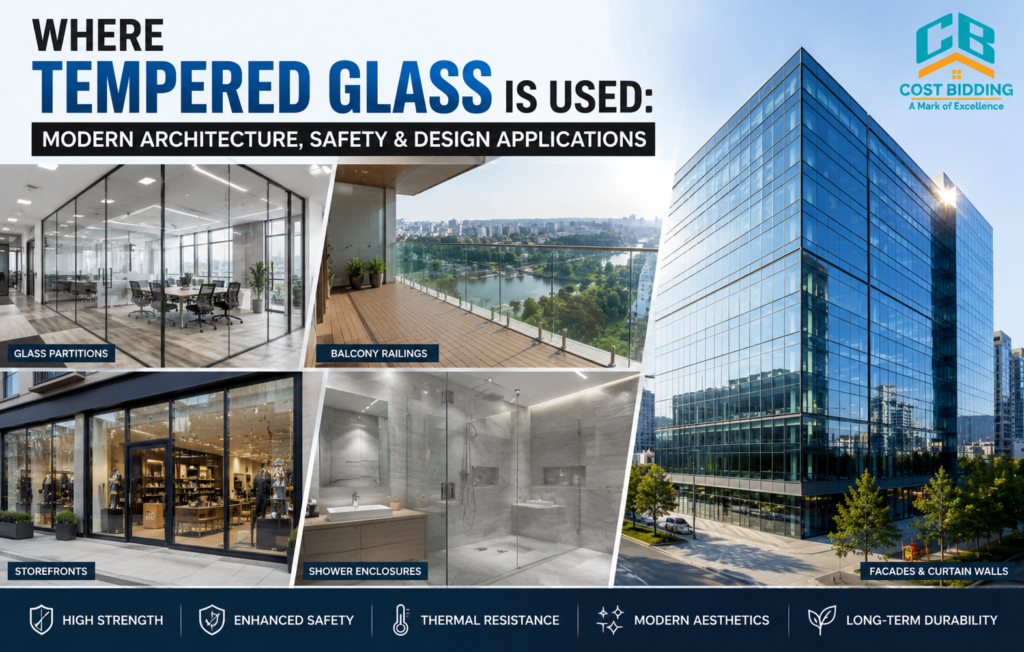
Tempered glass is used by professionals in front of stores and inside partitions, balconies, and structural glazing to satisfy modern building requirements and provide a high level of reliability over time. Its strength, safety, and visual clarity make it a favorite in projects where performance and design are required to collaborate, without alteration.
What is Tempered Glass?
If you are asking what tempered glass is, it is a kind of safety glass that manufacturers reinforce with extreme heating followed by a drastic cooling of the glass. This process modifies the internal structure of the glass, and the outcome is much stronger than the normal glass, which has been annealed.
It is capable of withstanding more impact, pressure and variation in temperature without cracking. Once fractured, it does not create sharp edges, but small, blunt pieces, making it safer in buildings.
Its is used in windows, doors, partitions, and facades where the aspects of strength, safety, and durability are paramount.
5 Reasons Architects and Contractors Prefer Toughened Glass
Architects and contractors do not choose toughened glass only for its appearance. They like it because it addresses actual construction issues such as compliance with safety, durability, and long-term performance. This glass is durable in numerous commercial and residential constructions in terms of design and structural stability.
Stronger Performance Under Pressure
A toughened glass is far stronger than a normal one. It can withstand heavy wind loads, daily impacts, and heavy traffic conditions, and thus can be used indoors, in storefronts, and in large window systems.
Safer Break Pattern for Public Spaces
One of the largest causes that makes contractors choose toughened glass is safety. It is not cut off into sharp pieces but into little blunt ones. This minimizes the risk of injury and helps to achieve building codes in schools, offices, malls and residential projects.
Better Heat Resistance and Thermal Stability
Modern structures are directly exposed to the sun and abrupt temperature changes. Exceptional glass is engineered to work under thermal stress and minimizes the possibility of cracking, particularly in exterior applications and high-rise glass facades.
Perfect Fit for Modern Architectural Design
Toughened glass is the favorite of architects as it underpins sleek and modern designs. It is effective in clean lines, open interiors, glass partitions, balcony railings, and modern facade systems without being obscure or hideous.
Long-Term Value and Low Maintenance
Contractors choose materials that minimize future maintenance problems. Hardened glass is durable and more wear-resistant, and it can be easily maintained, provided that it is properly mounted. This renders it an economical option in projects that are geared towards performance and durability.
Manufacturing Process in Modern Construction
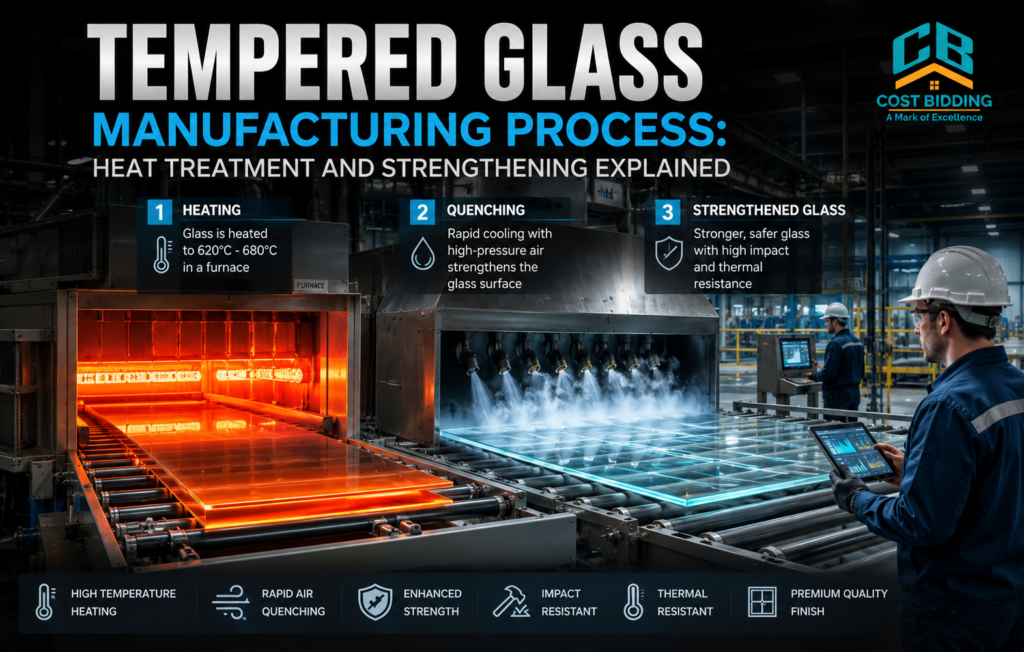
Toughened glass used in modern construction works is preferred by a contractor. Due to its ability to provide a potent combination of strength, safety, and durability that cannot be found in standard glass. Its designed form ensures it can be used in high-rise developments as well as in residential projects where durability is a consideration.
The toughened glass is made in a controlled thermal process that greatly increases the strength of the glass. Normal glass is initially cut to size and thoroughly checked then heated to very high temperatures. Then it is quickly cooled by a process known as quenching which fixes the outer surfaces in compression and the inner core in tension. It is this stress balance that makes toughened glass very strong and with good safety performance. Due to this process, any alteration, such as cutting or drilling has to be done before tempering since it can break the glass after it has been processed.
Tempered vs. Annealed vs. Laminated Glass
The choice of the right type of glass plays an important role in the construction safety, cost planning and long-term performance. Tempered, annealed, and Laminated glass types are preferred most of the time by contractors and architects. These guys decide the most suitable glass category based on the structural and design requirements of the construction project. Considering the fact that tempered glass in construction gives the highest leverage in terms of safety and durability, architects often go for it instead of other materials.
All types of glasses have their purpose. Annealed glass is the least complicated to work with in simple applications, toughened glass is strengthened through thermal treatment, and laminated glass is geared towards maximum safety by making sure that the structure of the glass is not lost in case it breaks.
Differences Between Tempered, Annealed, and Laminated Glass
Annealed glass is highly sensitive and forms sharp edges when broken down into pieces and therefore, it is only deployed in low-risk environments where safety is not a major concern. It is the cheapest alternative, but it is also the least protective.
In toughened glasss, a heating and rapid cooling process is used, which greatly enhances its strength. It is also safer as it falls into pieces that are small and blunt rather than sharp edges. This is why tempered glass windows, doors, and building facades are a perfect choice for high rise facades.
Laminated glass has two glass layers bonded with a PVC/EVA interlayer of plastic. The glass remains in place even when it breaks, which provides the highest safety and security compared to other categories. Moreover, this attribute makes laminated glass the best bet in high-rise or high-security installations.
Comparison Table
| Glass Type | Strength Level | Safety Performance | Price Level |
| Annealed Glass | Low | Breaks into sharp, dangerous shards | Low |
| Tempered Glass | High | Breaks into small, blunt pieces | Medium |
| Laminated Glass | Very High | Holds together after impact | High |
Cost Analysis of Estimating Tempered Glass Prices for Projects
Project planning and successful bidding heavily involve accurate budgeting and professional construction estimating services for commercial and residential developments. The majority of contractors and estimators take into consideration a number of factors before coming up with Accurate material quantities and construction takeoff services help contractors avoid costly budget overruns, especially in commercial facades, windows and interior installations.
Key Factors That Affect Pricing
Some technical and design-related factors directly relate to the total cost of toughened glass in construction ventures:
Thickness (6mm, 10mm and 12mm):
Thicker glass is stronger and safer yet more expensive in material and processing. A 12mm panel is usually expensive compared to a 6mm panel because of the increased raw material consumption and tougher thermal treatment needs.
Size and Dimensions
The bigger glass panels are more complex to handle, transport, and gain more control in manufacturing. Large pieces of paper also contribute to the risk in the fabrication process, which is reflected in the final cost.
Edge Fabrication and Finishing
Beveled finishes, polished edges, and custom shaping add to the time of production. Such finishing touches enhance the safety and beauty of work, and increase the cost of bids.
Cost Tip: Why Custom-Cut Glass Costs More
The cost to purchase custom sizes is usually higher for the contractor since manufacturers have to cut and shape the glass and then proceed to the tempering process. When glass is tempered, it cannot be cut or altered in any way without breaking into pieces. This restriction compels the designers to make accurate measurements during the design phase, which adds more planning work and expenses incurred during production.
To this end, standard-size panels tend to be less expensive, whereas custom specifications entail extra production processes and quality assurance measures. The right planning will also reduce wastage and maintain project budgets on track, and also ensure that it is installed at the right fit.
Professional Installation: What Contractors Need to Know
Glass performance, safety and durability are vital to professional installation. Even good panels may not work when contractors neglect proper handling, spacing, and framing requirements. This is the reason why good projects are always initiated with proper planning, tools, and practice of installations.
Accurate Site Measurements Come First
Contractors are required to verify all the field dimensions before making the final order. The installation of glass cannot be adjusted at a later date. Therefore, even minor measurement errors can lead to costly delays, reorders, and project downtime.
Use the Right Framing and Support System
A robust frame makes the glass stable when under pressure, vibration, and weather conditions. Contractors are advised to ensure that the frame has the correct load rating, expansion, and contraction during the change of temperature changes.
Handle Glass Panels with Care
Movement and lifting of glass by suction cups, padded support and risk-free lifting should be adopted by the installers. Scratches, edge chips or improper stacking may spoil the panel and reduce its life span, especially in a commercial installation where there is a lot of traffic.
Ensure Proper Clearance and Gasket Placement
There must be sufficient clearance of glass within the frame to avoid stress cracks. Rubber gaskets, setting blocks, and spacers must be fitted properly by the contractors. They should absorb movement and avoid direct contact between the glass and metals.
Follow Safety and Building Code Requirements
Contractors should always abide by the local building codes, OSHA safety regulations, and glazing standards. This can include laws that require the use of safety-rated glass on doors, windows, railings, and other locations that are open to the general public, and so compliance can lead towards faster inspections.
How to Identify Genuine Tempered Glass?
Contractors and homeowners tend to think that all glass is tempered and this belief can be very expensive. By checking authenticity before installation, you are safeguarding the project against compliance risks, safety concerns and failed inspections.
Check for the Manufacturer’s Stamp or Etching
Look for Distortion or Roller Wave Patterns
The heating and cooling of the material in tempering produces a slight optical distortion. Looking at the surface under light at an angle, you might find a slight wave or pattern.
Use Polarized Light to Spot Stress Patterns
Polarized sunglasses or a phone camera filter can also be used to test safety glass. As you peer through the glass at a bright source of light, you might see black lines or spots. These stress marks develop when the tempering process is taking place and serve as a powerful means of authenticity.
Verify Documentation from Suppliers
Reliable suppliers offer certification and product documentation where the type of glass, its thickness, and safety is listed. Contractors are supposed to demand such records during the procurement, particularly in commercial projects where glazing materials need to be code-approved.
Through such identification processes, contractors will be able to evade poor quality replacements and enforce every installation to the safety standards and particularities of the projects.
Maintenance and Longevity
Long term maintenance will extend the life of glass installations and make them appear clean, clear and professional over the years. Construction with tempered glass can be observed in any busy area like doors, storefronts, partitions and windows. So the contractors and property owners should adhere to the correct cleaning processes in order to preserve the surface of toughened glass.
Use Non-Abrasive Cleaning Materials
When cleaning glass, always use a microfiber cloth or a soft sponge. Rough pads, steel-wool, or coarse scrubbers may leave fine scratches, which will always diminish the clarity and reduce the visual appeal of the surface.
Choose Mild Cleaners Instead of Harsh Chemicals
Warm water and a mild dish soap are all that is needed to do the basic cleaning. Never use ammonia cleaners, acidic chemicals, and strong solvents since they may destroy coatings, seals, and the surrounding frames.
Clean Dust First to Prevent Scratches
Wipe with a dry microfiber cloth or light rinse to remove dust and loose debris before wiping. When you rub dust onto the surface, it will resemble sandpaper, and there will be noticeable scratches.
Avoid Sharp Tools and Improper Scraping
Do not use blades, metal scrapers, or sharp objects to remove paint, stickers, or cement residue. Alternatively, clean with approved plastic scrapers and cleaners used in cleaning up construction.
Inspect Seals and Edges Regularly
Edges and corners contribute largely to durability. Gaskets, frames, and sealant lines are the areas that should be checked by contractors to avoid moisture accumulation and damage in the long run.
Tempered glass in construction is a long-lasting and cost-effective construction material choice. With proper care, the glass retains its strength, transparency, and modern finish, making it an ideal choice in residential and commercial construction projects.
Conclusion
Modern construction requires materials that provide safety, durability and longevity, and tempered glass fulfills all these demands perfectly. It is a reliable choice because of its high strength, safe break pattern, and heat and impact resistance for architects, contractors and builders working on both residential and commercial projects.
By being knowledgeable of the distinctions among types of glass, estimating correctly, and practicing correct installation, professionals decrease risk in the project and increase the quality of the whole building. This material is used in windows, partitions, storefronts, and structural applications. Moreover, it is preferred in design projects to serve modernism and to conform to high standards of safety.
At Cost Bidding, we enable contractors to plan smarter and estimate better by offering a cost-oriented construction expertise that will deliver accurate bids and profit on their projects.
FAQs
How can you tell if glass is tempered?
Tempered glass can be detected by looking into the corner of a piece of glass, or by a tempered stamp or an etching which is embossed with the word Tempered or Safety Glass. Secondly, polarized light can also reveal a slight distortion or stress pattern, which proves that this has been heat-treated.
What is Tempered Glass Used for?
This is frequently used in windows, doors, shower doors, store fronts, glass railings, partitions, and curtain wall systems. It is selected by contractors in high traffic locations due to its increased strength and better safety performance.
Can tempered glass be recycled?
Yes, it can be recycled, but it needs special processing. It is not recycled in most recycling plants since its break pattern and chemical structure do not match regular glass, and thus you need to check with the local recycling centers.
Is tempered glass bulletproof?
No, it is not bulletproof because of more resistant to impact than ordinary glass though it is not bulletproof. Bullet-resistant glass typically incorporates laminated layers comprising polycarbonate material that is developed to offer high security.
How much does it cost per square foot?
Tempered glass (10mm) is available at an average cost of $20 to $40 per square foot based on its edge finishing, coating and special fabrication needs. The ultimate cost can also be raised by installation and delivery costs.