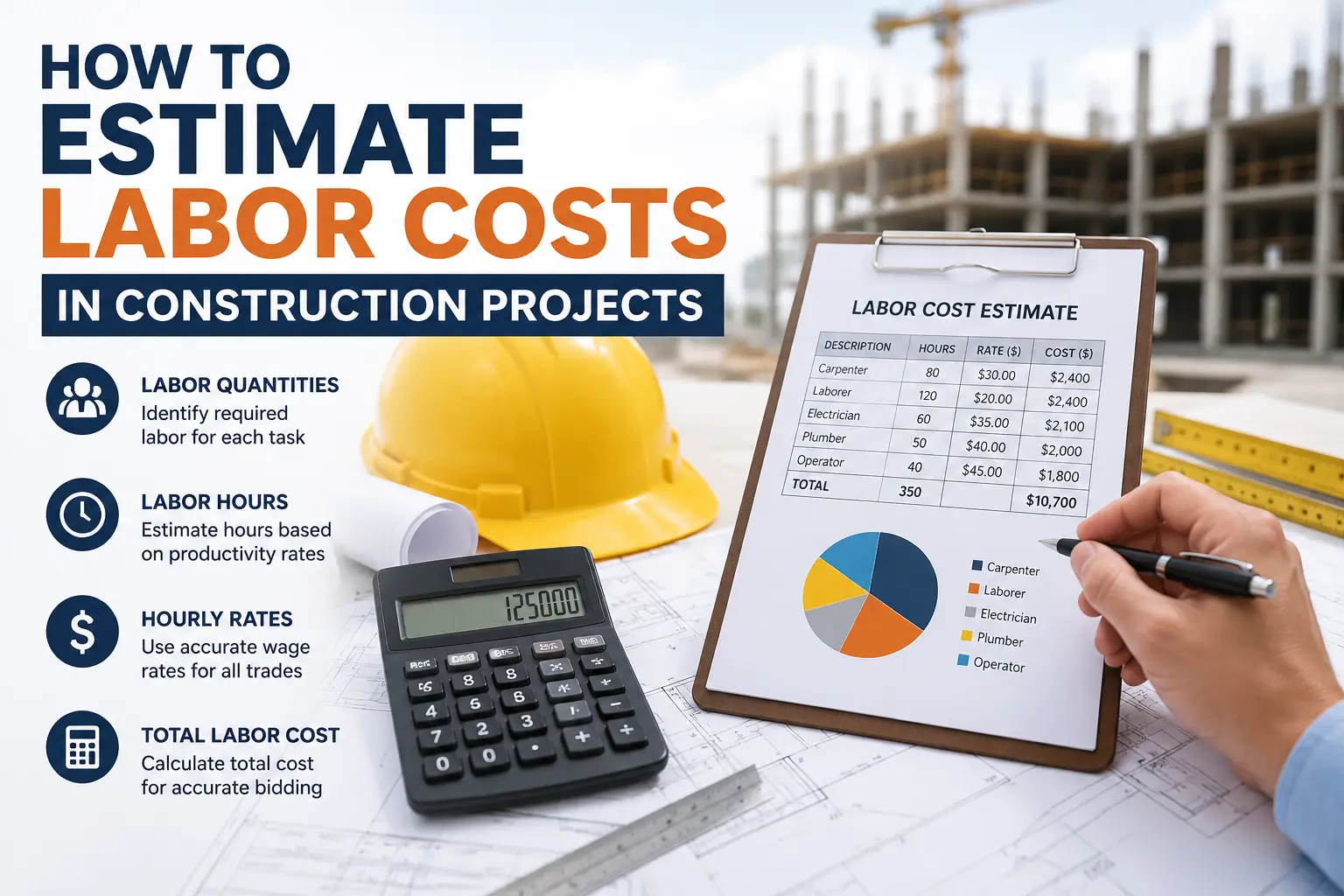
Accurate cost estimation and financial clarity are important for project success in the construction industry. The profitability of construction projects depends on the accuracy and effective management of budgets. In today’s tech-driven world, reliance on manual estimates not only damages the project’s integrity but also derails your budget. Moreover, manual techniques could be time-consuming and lead to errors. This is why tech-driven estimates are particularly helpful.
Construction Bidding Software is useful in ensuring accuracy and winning the bids in a competitive construction industry. Whether you are a homeowner, contractor, or builder, selecting the right software can solve many issues and enhance the efficiency of your project. If you are looking for suitable software for your construction project, this blog will provide insights into the different types of software, their key features, and emerging trends in the software industry. Hold up your horses and let’s delve into the details/
The Evolution of Bidding in the Construction Industry
Before discussing the bid software for construction projects, it is important to understand the evolution of bidding in the construction industry. In the early centuries, the project owners negotiated directly with the agencies, and estimates were informal. Bidding was more of a handshake arrangement than a procedure. Industrialization led to the emergence of formal and competitive bidding. Government agencies began requiring bids to reduce the discrepancies. Bill of quantities became a standard tool to define the scope. Afterwards, a massive infrastructure project led to increased complexity in bid coordination. With the advent of technology, bidding software started emerging and took centre stage in the bidding process. Now, the construction industry uses AI-powered estimating tools, digital means, and blockchain in procurement.
What is Construction Bidding Software
Construction bidding software is a tool that is specifically designed to automate the construction bidding process. It also acts a a platform where contractors can create, track, and manage several bidding opportunities efficiently. These tools are useful for gathering, assessing, and managing the costs associated with labor, equipment, and selected materials, helping clients to experience profitability in their construction projects.
Moreover, bidding software also features document control, automation, bid management, and real-time collaboration between stakeholders. These advanced tools help the clients manage their business from the initial stage to the final proposal submission.
Key Features of Construction Bidding Software
Bidding software for construction consists of key features. Here is the detail of these features!
Core Bid Management
Centralized bid database: it stores all active, previous, and upcoming bids in a single platform, eliminating errors resulting from scattered information.
Real-time Project tracking: The tracking allows users to evaluate and monitor bid status, response rates, and submission deadlines to maintain transparency in the bidding process.
Search and filter tools: They help in locating the bids through project names, location, bid date, and clients.
Estimating and Costing Tools
The construction bid software integrates with digital blueprints to calculate material quantities and labor requirements. By analyzing the current market prices, it also delivers accurate prices for materials and labor. It also compares multiple pricing strategies to select the most competitive bid.
Document Management
Plan and Specification Uploads: The software uploads and stores blueprints, technical drawings, and tender documents.
Secure File Sharing: The clients can also share and upload the bid documents with controlled and secure access.
Quick Retrieval: While preparing bids, the software implements powerful search features to find suitable information forthwith.
Vendor and Subcontractor Management
It keeps the records of subcontractors’ licenses, credentials, insurance, performance, and safety protocols. In one click, you can send the project details to multiple subcontractors. It can also be helpful in side-by-side evaluation of subcontractor quotes for price and scope.
Collaboration and Communication
It enables real-time messaging and direct communication between estimators, subcontractors, and project managers. Moreover, built-in communication tools also provide information and updates regarding bids. User-friendly interface allows the stakeholder to send email notifications, bid reminders, and clarification directly from the system.
Scheduling and Deadlines
The bid calendar shows all bid deadlines and site visits in a timeline view. It also notifies the team ahead of key events and delegates bid-related tasks to a specific team.
Compliance and Risk Assessment
Regulatory compliance ensures that bids meet legal and regulatory requirements. It also monitors the validity of necessary bonds and insurance certificates.
Integration and Mobility
The construction bid software also exhibits integration with accounting and RFP systems. Integrating with mobile applications allows managing bidding activities on smartphones. The cloud-based access also enables remote teams to collaborate in real-time.
Reporting & Analytics
It helps in evaluating bid performance over time to find the areas of strength and weakness. It also provides a detailed analysis of cost components in each bid and calculates profitability from successful projects.
Benefits of Using Construction Bidding Software
| Benefit | Description | Impact on Bidding Process |
| Time Efficiency | Automates repetitive tasks like cost calculations, document creation, and bid submissions. | Speeds up bid preparation, allowing contractors to bid on more projects. |
| Centralized Data | Stores all project documents, drawings, and bid histories in one place. | Enhances collaboration and ensures easy access for all stakeholders. |
| Accurate estimates | Reduces manual errors by using built-in cost databases and templates. | Leads to more competitive and profitable bids. |
| Improved Collaboration | Enables multiple team members to work on the same bid simultaneously. | Reduces miscommunication and improves teamwork. |
| Standard formats | Uses consistent templates and formats for all bids. | Improves professionalism and compliance with client requirements. |
| Real-time information | Provides instant changes to pricing, material availability, and deadlines. | Helps adapt bids quickly to market or client changes. |
| Precise bid tracking | Monitors bid status, deadlines, and success rates | Improves decision-making for future bid strategies. |
| Integration with other tools | Connects with project management, accounting, and CRM software | Streamlines the workflow from bidding to project execution. |
| Competitive edge | Produces faster, more accurate, and more professional proposals | Increase chances of winning bids. |
| Affordability | Reduces administrative work and rework from errors. | Lowers operational costs over time. |
How Construction Bidding Software Works

Here is a complete overview of how construction bidding software works, from project proposal to final bid submission.
Creation & Documentation of Project
The first step involves the creation of a projection within the bidding software. The project owners or general contractors upload key details regarding the project, such as drawings, specifications, scope and nature of work, budget, and scheduling.
Bid Notifications & Invitations
Once the project’s details are entered into the bidding software, the invitations can be sent to a pre-selected list of subcontractors, suppliers, and vendors. For top-notch matching, the filters are used to find competitive and suitable contractors. Subcontractors receive notifications about bid opportunities and bid deadlines.
Bid Management
The software also helps in bid management. The contractors can view all incoming bid opportunities, requirements, and deadlines in a single platform. In this process, they can ask questions and seek clarification regarding the bids. They can also update the documents in real time.
Takeoff and Estimating
The next step involves takeoff and estimating by integrating with these tools, allowing contractors to measure quantities from digital blueprints. Through this step, the contractors can calculate labor, material, and equipment costs quickly. They can pull pricing from historical databases.
Bid Preparation
After receiving the bid invitation, the software helps in preparing the bid. Takeoff tools are integrated, allowing clients to perform digital takeoffs from drawings and calculate costs for equipment, labor, and materials. It also uses historical databases to improve accuracy.
Bid Submission and Evaluation
In the final step, the subcontractors prepare and submit the bids directly through the software. It also features built-in checks to ensure bids are compliant and complete, thereby reducing the likelihood of rejection due to errors.
Award and Contracting
Once the bid is submitted and selected, the contractors are notified directly within the system, allowing the smooth transition from bidding selection to contract management. Moreover, the software also helps in signing the contracts electronically for a quick turnaround.
Choosing the Right Construction Bidding Software
When choosing the right construction bidding software, it is important to think of it as more than just a tool for preparing and submitting bids. So it is necessary to consider certain points before selecting tools and software for your bids.
Project Scope & Needs
Before choosing the software, it is important to define the project scope and needs. The clients must assess the project scope and identify its specific needs. Project types should also be considered, as large-scale project requires advanced software. On the other hand, residential projects do not require more complexity. You must also assess team size, integration requirements, technical capabilities, and budget constraints.
Prioritizing Key Features for better results
For better outcomes, one needs to choose the bidding software that addresses the entire bid lifecycle. It is important to choose the software that resolves your specific challenges and supports your bidding process effectively. Whether you are looking for bid management, estimating needs, subcontractor management, or integration, the single platform should deliver all the options, leading to scalability, affordability, and robust bids.
User Experience Factors
Software should be easy to use, enhancing user experience and reducing the need for training. The software should be mobile compatible, as estimators and managers should be able to work on-site. Cloud systems offer more flexibility as compared to on-premise tools, allowing teams to collaborate remotely. On the contrary, on-premise tools provide security control over the sensitive information.
Cost Considerations
Before choosing software, you must understand your budget requirements. You must consider licensing models, user fees, hidden costs, and return on investment.
Aligning software types with needs
The type of software you use should align with your project needs. If you are looking for estimating services, construction estimating software will solely focus on delivering cost evaluations and bid preparation. For smooth and better work connectivity, integration-based software will reduce the workload. Document management tools offer better organization and security of bid documents by automating the process.
Scalability
Always choose software that can grow with your business and enhance the profitability of your project. Scalability ensures you can keep using the software as your project volume and business size increase.
Get In Touch With Us Today For More Details
Top Construction Bidding Software Options in 2026
Let’s discuss some top construction bidding software options in 2026
Procore

It is a comprehensive construction management software that is designed to handle everything from preconstruction to financials. It can easily save details like drawings and specifications within packages, and companies can turn awarded bids into contracts with a line-item breakdown. It makes finding bids easier due to search based on location, codes, and price. Owing to flexibility, the commercial companies can find specific contractors for large-scale projects.
Pros
It contains a powerful AI assistant and automation features.
Strong third-party integration through the app marketplace
End-to-end workflow coverage
Customized reporting
Cons
Expensive for small firms and projects
It is complex, so it requires training
Pricing is customized, resulting in limited trends.
Buildertrend

BuilderTrend is highly recommended for residential projects, allowing the clients to view daily updates, payments, and communication. This software is important for homebuilders who often follow the exact client specifications.
It offers accurate estimation tools to help construction companies take only profitable jobs.
Pros
It is user-friendly with mobile access
It offers excellent customer communication features
Strong reporting and filtering tools
Customized options for homeowners
Cons
High pricing
Limited CRM and marketing functions
Non-custom workflow
STACK

STACK is a cloud-based digital take-off and estimating software that is designed for accuracy and speed in preconstruction. It simplifies estimating with a detailed cost database, ensuring accurate and competitive bids for projects of all sizes.
The digital takeoff feature helps in calculating the material quantities, labour costs, and equipment wages. The software also integrates with accounting and project management, bringing accuracy in every bid.
Pros
Intuitive takeoff services
Real-time collaboration
The free version is available for small teams
Showing integration and streamlined workflow
Cons
It lacks broader project management features
Licensing can get costly
Limited custom options for small teams
High pricing for small firms
SmartBid

It is a bid management software for general contractors and subcontractors that helps in bid inviting, tracking, and subcontractor prequalification.
Pros
Streamlines communication with large subnets
Strong security and reporting
Cons
It is not ideal for subcontractors
Not in-built takeoff tools
Non-customized pricing
ProEst

It is a cloud-based tool that simplifies construction estimating by incorporating different features such as digital takeoff, custom options, and real-time collaboration among the stakeholders. Integration with other software improves the efficiency and consistency of projects.
Moreover, the user-friendly interface helps users experience accurate estimates more quickly.
Pros
Cloud-based data for secure data storage
Quick and accurate digital takeoffs and cost estimations
Customized template for the users
Easy-to-use mobile interface
Cons
It lacks some highly specialized features
High subscription fees
Facing difficulty in the learning curve
PlanSwift

PlanSwift is a top choice for construction estimating firms. It offers a user-friendly interface and helps in calculating material quantities and labor costs from digital takeoff services. The software can easily integrate with tools like Buildertrend and Procore, improving the accessibility of data and reducing errors.
It also offers flexible pricing for both small contractors and large-scale estimating firms, showing a blend of accuracy and affordability.
Pros
Easy-to-use interface
Flexible pricing
Integration with other software
Cons
Limited customization
Difficulty in the learning curve
Non-customized templates
Implementation Tips for Construction Bidding Software
For better implementation, consider the following tips for construction bidding software.
- It is essential to assess your needs, identify areas for improvement, and define clear goals before selecting the tools.
- Always choose a system that brings growth to your business and project, regardless of the nature of the construction project.
- You must ensure proper data integration and migration. Avoid mismatched cost codes and clean up the subcontractors’ information and cost databases before importing to the software.
- Integration with new and existing tools should be prioritized for better bid preparation.
- For a customized option, always create bid templates for different types of projects and align them with your estimating workflow.
- It is next to impossible to achieve efficiency and productivity without an experienced team. Specific and role-based training should be given to estimators. Moreover, a hands-on session should be provided.
- It is feasible to pilot the project before rolling it out. In this regard, start with one or two projects and collect the feedback from estimators after using the software. Adjust workflow, settings, and security according to the feedback.
Common Mistakes to Avoid When Using Bidding Software
There are certain common mistakes one must avoid when using the bidding software.
- Incomplete and inaccurate data can also reduce the chances of winning the bids. It can lead to miscalculations, underbidding, and overbidding. So it is important to double-check the project scope and update the cost database regularly to avoid mistakes.
- Always relying on the software’s default templates and pricing models without customization will also hamper project efficiency and competitiveness. Therefore, it is important to customize cost codes, markups, and reporting features.
- The failure to train the team properly also causes inaccurate entries and wastage of time and resources. It is important to provide hands-on training, build internal SOPs, and assign a software champion to support the team.
- The team must avoid the mistake of not leveraging the integration option. You must connect your bidding platform with accounting, CRM, scheduling, and project management tools for a seamless workflow.
- Submitting a bid without a thorough review can result in underpricing or overpricing bids. Therefore, it is important to cross-check estimates against project requirements before submission.
- Neglecting the collaboration features can also cost you a lot. Modern bidding software allows multiple project managers, contractors, and stakeholders to communicate in real-time, bridging the gaps before the submission of bids.
Future Trends in Construction Bidding Software
Certain future trends are emerging in the construction bidding software. For instance, AI-assisted bids and estimating models are gaining ground in the construction industry. AI in the construction industry is expected to grow from $4.9 billion in 2026 to $22.7 billion by 2032.
Deeper BIM and 5D integration tools will also be witnessed in the market, enhancing the chances of winning more bids.
Preconstruction software has also become important for value engineering, bid leveling, vendor outreach, and takeoff estimating. This segment is projected to more than double from 2024-2033.
Are You Looking for an Expert Company for Construction Bidding Software?
Are you looking for a professional company that can help you in the construction bidding process by using the advanced construction bidding software? Look no further than Cost Bidding. We are among the most reputable companies in the town. At Cost Bidding, we take pride in delivering accurate software bidding services by using advanced tools and techniques. Our estimators have been equipped with years of expertise in the construction industry and possess in-depth knowledge of the bidding process. They also possess the knowledge about the software and tools used in the industry. We do not compromise on the quality of bidding services. If you are looking to build a new construction and are clueless about how to bid and make a proposal, contact us now for detailed and precise bidding. We deliver accurate bidding based on cutting-edge software.
Conclusion
No one denies the importance of an accurate bidding process for your new build. By utilizing our top-notch construction bidding software services, you can pitch winning bid proposals, avoid cost overruns, reduce financial surprises, and improve budget management. If you are looking for a professional and reputable estimating firm to help you in bidding, we are the right platform, as we know how to capitalize on the software to win more bids and secure more projects. To explore further services, visit our website.
Frequently Asked Questions
- Define construction bidding software in simple terms?
It is a digital tool designed to help contractors, subcontractors, and project owners prepare, manage, review, and secure more bids. It also manages cost estimation, bid proposal-making, and bid comparison.
- Who can use the bidding software?
Professional clients belonging to different backgrounds, including general contractors, project managers, estimators, subcontractors, and procurement teams.
- What features should I look for when choosing a bid software?
You must look for the following features
Cost estimation tools
Digital bid submission
Document management
Cpllaboration
Bid invitation
Integration with other firms
- How does software save time?
It saves time by automating repetitive and tedious tasks and reducing the time for bid preparation by up to 40% as compared to manual methods.