While planning the construction project, managing the costs holds significant importance. Everyone focuses on the visible expenses, including labor rates, materials, and equipment. These visible expenses are known as hard costs. On the other hand, project managers often neglect equally important costs, which are soft costs.
Soft costs in the construction project play an important role in ensuring that your project is compliant, well-planned, and well-executed without cost overruns. Soft costs are those expenses that do not include the physical costs of the building process. It manages everything that is needed to support the project before, during, and after construction. These soft costs emphasize planning, organizing, and handling the project while ensuring regulatory approvals and safety standards.
If you are worried about what soft costs are in construction and how to deal with these costs, fret not! This blog will break down what these costs are, their types, benefits, and their role in the construction budget.
Construction soft costs and their importance
Soft costs are defined as the indirect expenses of a construction project that are not directly associated with physical building activities. Most of these costs are non-tangible, including fees, services, and insurance.
The construction soft costs often support the planning, design, administration, and completion of the project. These costs are incurred from the pre-construction stage of a project to the post-occupancy stage and beyond.
They typically account for 25% to 40% of total project costs, depending on the project type and complexity.
Key Features of Soft Costs
Non-physical and non-tangible: These costs do not belong to tangible and physical costs related to construction projects.
Ongoing nature: Unlike hard costs, soft costs do not end after the execution of the construction project. It continues even after construction ends, like insurance and maintenance.
Essential: These costs not only ensure compliance and financial security but also produce quality design and project coordination.
Importance of Soft Costs
Soft costs play an important role in the construction project. It determines the smooth functionality of the project and avoids cost overruns. Here is the importance of soft costs!
Project Planning & Feasibility
During project planning and feasibility studies, soft costs are important. Land surveys and environmental assessments determine whether a project is doable or not before committing to construction expenses. Moreover, the costs related to engineering and architectural designs can reduce risks during the building phase.
Risk Management & Financial Control
Soft construction costs, including bonding, insurance, and financial consultation, help mitigate budget risks. Insurance protects owners from damages and liabilities. Consultation with financial estimators helps ensure the budget remains within the timeline.
Ensuring compliance
The reliability of a construction project depends on its compliance with local building codes, safety standards, and zoning laws. Permit and inspection fees are included in the soft costs that ensure the project remains compliant and avoids regulatory issues.
Reducing cost overruns
Accurate budgeting for soft costs gives the idea that you can cover every aspect of the project, not just the materials and labor. It assists you in avoiding budget surprises, cost overruns and keeps the project on track from start to finish. Soft costs are the foundation of a well-planned, successful construction project.

Difference Between Hard and Soft Costs
Both soft and hard costs are important for making the construction project successful. Here is the basic difference between hard and soft costs.
| Aspects | Hard costs | Soft costs |
| Definition | Hard costs are the physical and tangible expenses directly related to the construction of a project. | Soft costs are defined as the indirect expenses of a construction project that are not directly associated with physical building activities. Most of these costs are non-tangible, including fees, services, and insurance. |
| Nature | Hard costs are direct and measurable, and are associated with materials and labor | Soft costs are indirect expenses, including services and administrative functions |
| Physical & tangible nature | Hard costs are tangible and physical in nature, showing building expenses | Soft costs are not physical. They represent services rather than physical expenses. |
| Timing | The costs are incurred during the construction phase | These costs are incurred before, during, and after construction |
| Cost Variability | These costs are easier to estimate as they depend on the market prices of labor and materials | Unlike hard costs, soft costs are hard to estimate as these costs vary by scope, complexity, and duration of the project. |
| Impact on budget | Typically make up 60-80 percent of total construction costs | Typically make up 20-40 percent of total construction costs |
| Purpose | To establish the actual structure of the project | To support and facilitate the construction process |
| Dependency | Depends on design specification and site conditions | Depends on project scope, nature, and legal codes |
| Examples | Materials, labor rates, equipment charges, site work, and MEP work | Permit fees, inspection charges, design fees, legal fees, marketing, and financing consulting |
Examples of Soft Costs in Construction
Design
A construction project always starts with design and architectural plans. In this regard, engineers and architects develop designs, creating detailed maps and technical drawings. It is important to consider expenses related to design, and one has to pay as an architectural fee. Paying these professionals is an essential part of soft costs. This category also includes fees for consultants who give the consultation during design development.
Permits and surveys
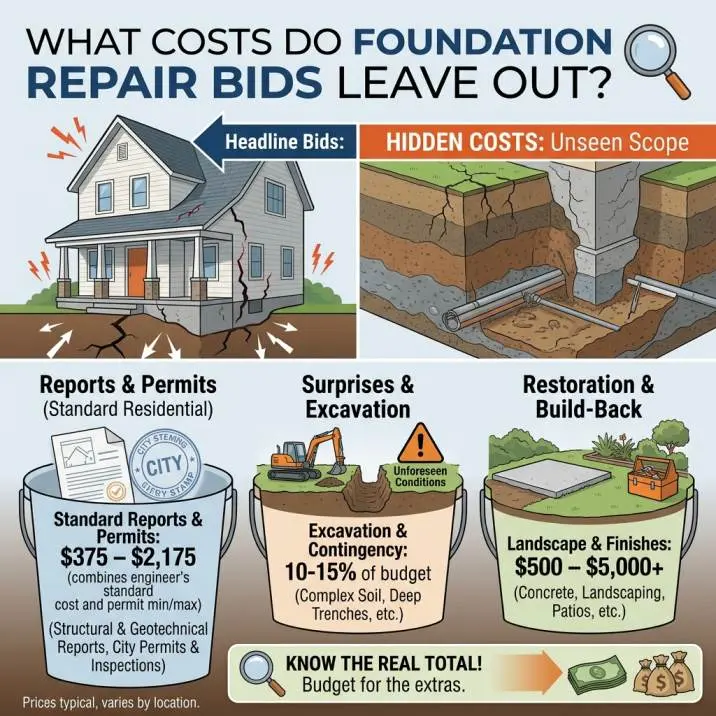
In soft construction costs, permits and surveys are important. It includes costs related to soil tests, topographical surveys, and other environmental surveys. One must acquire permits to prove that your construction must follow building codes and regulations. These permits involve zoning rules, safety standards, and ecological assessment. Legal fees are also included for hiring lawyers to resolve any disputes and handle contracts.
Financial and insurance
In the construction project, you have to deal with different types of financial costs. It includes loans and insurance. The soft costs contain the interest on the loan, fees for starting the loan, and any charges for managing the funds. Without proper financing, project planning and execution will be difficult.
Project management
Large-scale construction projects are difficult to manage. Therefore, it is important to hire a manager to manage your project effectively. They ensure that your tasks are completed on time and budget is followed according to the timeline. So their fees are considered an important part of soft costs.
Marketing
After the completion of your project, you must advertise it or prepare it for lease or sale. Marketing costs involve creating advertisements and running campaigns. These expenses are equally important for commercial projects like office or apartment buildings.
Post-construction
Even after the building is finished, soft costs don’t stop. You do spend money on landscaping, repairs, or ongoing maintenance. Additional property taxes or legal fees can also arise once the building is operational. These post-construction costs guarantee that the project remains functional and appealing.
Security and safety staff
It is important to prioritize the safety of the employees and construction projects by hiring professionals. Safety consultants can also help ensure it is a safe working environment and provide best practices to avoid injuries directly related to the job. Such types of costs are also part of soft costs in the construction industry.
Construction loan commitment fees
Construction loan commitment fees must be considered in the soft costs to ensure effective budget management and project efficiency.
Legal Fees
If you have to incur legal fees, this would be included in a soft cost. It is important to prepare yourself for some kind of legal fees, so having some money allocated for it is a good idea.
Breakdown of Construction Project Soft Costs by Category
Here is the detailed breakdown of soft costs in a construction project, which is organized by category.
| Category | Description |
| Architectural and Engineering fees | It includes costs for design and technical planning for the project. |
| Project administration | Costs related to coordination, supervision, and management, including the fees of the project manager and other staff. |
| Tech and Software costs | It includes tools that are used for planning, coordination, and management of the project. For example, software like Procore, BIM, and Primavera. |
| Financing costs | It covers the wide scope of financial needs that are part of the project, such as insurance, loans, and interest rates. |
| Feasibility studies | These costs are incurred before actual construction begins to determine the viability of the project. For instance, site assessments, land surveys, soil testing, and value engineering. |
| Taxes and Government fees | Payments to government agencies, in addition to permitting, such as property taxes, sales taxes. |
| Contingency for soft costs | Reserve funds that are kept aside to cover unexpected costs. For example, additional design revisions and market analysis updates. |
| Post-construction costs | It includes costs that occur after the completion of the construction project. These costs are often associated with turnover and operations. For instance, facility commissioning, staff training, and maintenance contracts. |

How to Estimate Soft Construction Costs Accurately
Calculating the construction soft costs is not an easy task. You must pay attention to a series of steps that are involved in calculating these costs accurately.
Understand Scope & Identify all Costs
One must start by understanding the complete scope of the construction project. In this regard, you have to document the location, project description, standards, exclusions, and schedule. Without documenting this, soft costs are ineffective. Moreover, it is also important to identify all the costs, including design fees, permits, insurance, and project management expenses. Break the project into three phases: pre-construction, construction, and post-construction, and list the costs for each.
Choose the correct estimation method accordingly.
After understanding all the soft costs, you must choose an estimation method according to your project scope. Three methods are used. In the Top-down or parametric method, industry ratios and historical data are utilized, as it is good for the early stages. In the bottom-up approach, each soft cost line item is calculated from vendor quotes, rates, and unit costs. The third method is hybrid, in which parametric is used for small items and elemental for major ones.
Hiring & Consulting with Professionals
To estimate soft costs accurately, one must hire and consult with professionals. These professionals, including engineers, architects, and project managers, can offer realistic ideas of the project’s soft costs. These professionals understand the market trends and give the best possible options accordingly. Their expertise can save you time and money while improving the accuracy of the estimates.
Gathering data sources
The accurate estimation of soft costs also depends on gathering data from different sources. One can gather data from historical project cost records, vendor proposals, public fee schedules, and various market indicators.
Break the budget into granular line items.
For accuracy, it is also important to break the soft costs into granular line items. One must ensure that for each line item, it is important to add unit, description, quantity, unit rate, assumptions, and line total.
Leveraging cutting-edge tools and technologies
Technology can also bring accuracy to soft costs. Many builders use construction management software to assess budgets and calculate costs. These tools help you organize your expenses, compare them to similar projects. By using software, you can also update your budget in real time if changes happen during the project.
Managing and Reducing Soft Costs Construction Overruns
Effective Budgeting & Planning
Accurate and effective planning is important for managing and reducing soft costs overruns. By anticipating potential costs, you can reduce the chances of unexpected expenses. Careful planning at the pre-construction stage helps you to understand the financial landscape of the project.
Plan for Contingencies
In comparison to hard costs, soft costs are more difficult to predict. Therefore, it will be a useful strategy to plan a contingency for soft costs. Construction companies often rely on construction allowances to prevent their budgets from unexpected cost overruns. Construction managers have the option to easily set their allowances as necessary.
Organization
The non-physical and non-tangible nature of soft costs makes it more prone to unpredictability. The foundation of a successful construction project depends on categorizing and detailing each potential soft cost item. Through this approach, owners can predict costs related to legal fees, design changes, and permitting fees. Creating a dedicated soft cost schedule within the project’s financial framework accounts for these often-overlooked expenses.
Get In Touch With Us Today For More Details
Communication among stakeholders
Communication and collaboration hold significant importance for managing soft costs. They offer unique perspectives and insights into project requirements, thereby creating a more robust and realistic budget.
Creating an RFI can be a great approach for keeping good communication within the team. This will enable you to develop accurate cost estimates and minimize budget overruns.
Formulating Clear Contracts
Contract formulation is one of the most essential parts of construction projects. It serves as a building block for managing and accurately estimating soft costs. A well-structured contract can help you anticipate these costs, while vaguely created contracts can lead to budget mismanagement. Therefore, a clear contract should consist of a clear scope of work, identification of protocols, and liabilities.
Using cutting-edge software for cost estimation
Accuracy always comes from using the cutting-edge software for soft cost estimation. This software helps the project managers to track costs and reduce cost overruns, thereby bringing precision to costs.
Hiring professionals
Sometimes, managing soft costs becomes a hectic task as it requires skills and professionalism. Experienced and certified contractors and project managers bring a plethora of expertise to the table. They seamlessly plan the project, manage the costs, and implement the project. Their knowledge and industry-leading practices prevent omissions and mistakes.
Impact of Soft Costs on Bidding and Project Financing
Soft costs play an important role in impacting both bidding and project financing in the construction industry. Unlike hard costs, which include labor rates, material costs, and equipment rates, the soft costs include expenses such as design fees, legal fees, insurance, marketing, and financing. When project managers and contractors underestimate soft costs, bids may appear more competitive, but this can later lead to cost overruns and cash flow issues. On the other hand, when you overestimate these soft costs, bids become less attractive for clients.
In terms of project financing, lenders often assess the soft costs to determine project feasibility and risk. High or poorly justified soft costs can cause concerns for financers, thereby affecting loan approval and interest rates. Therefore, effective management of these costs during the bidding and financing phase is important for ensuring project feasibility and long-term financial viability.
Are You Looking For an Expert for Estimating Construction Soft Costs?
Are you looking for a reputable company to estimate soft costs associated with your construction project? Look no further than Cost Bidding. We are among the best construction cost estimating companies in the town. At Cost Bidding, we specialize in delivering soft costs analysis by breaking down the soft costs, such as design fees, financing insurance, marketing and sales fees, and taxes. Our estimators have been equipped with years of cost estimating expertise and knowledge in the construction industry. They carefully analyze the market trends and offer the best possible soft cost breakdown and projections of these non-physical costs. They also help in managing the budget and estimating accurate costs by using cutting-edge tools. If you are wondering about the details regarding construction project soft costs, contact us now for a precise estimation.
Conclusion
No one denies the importance of calculating soft construction costs for construction projects. Soft costs are defined as the indirect expenses of a construction project that are not directly associated with physical building activities. Most of these costs are non-tangible, including fees, services, and insurance.
The construction soft costs often support the planning, design, administration, and completion of the project. If you are looking for a reputable estimating firm to help you with soft cost estimations, Cost Bidding is the right firm. To explore further services, contact us or visit our website.
FAQ
What are construction soft costs?
Soft costs are indirect expenses of a construction project that are not directly associated with physical building activities. Most of these costs are non-tangible, including fees, services, and insurance.
What are common examples of soft costs involved in a construction project?
- Architectural fees
- Legal and accounting fees
- Project management fees
- Permits and inspections
- Insurance and bonding
- Marketing and leasing expenses
- Environmental studies
When are soft costs incurred in a construction project?
These costs begin before construction starts and continue after the completion of the project.
Can soft costs be controlled?
- Yes, it is possible to control these soft costs by
- Negotiating professional service fees
- Streamlining permitting
- Using in-house project management
- Regularly viewing and updating estimates
Why are soft costs important?
- They affect the project’s financial feasibility.
- Influence ROI
- Impact cash flow and financing needs
- Ensure regulatory compliance