In the construction industry, the success of the project depends on effective cost planning and budget management. During the pre-construction stage, one of the most crucial components is construction cost estimating, which shapes the trajectory of your project. From small renovations to large-scale construction, it is important to take into account every cost associated with material selection, labor, equipment, and indirect costs.
Therefore, in construction cost estimating, one must anticipate the cost of a construction project, including both hard and soft costs. This process involves calculating the total cost required to complete a construction project within a defined project scope. Here is the catch! Calculating and estimating construction is not an easy task, as it demands knowledge and expertise. This blog will explain cost construction estimating and the steps to estimate these costs. Let’s delve into the details.
What is Construction Cost Estimating?
Construction cost estimating services are defined as the process of calculating all the required costs for all kinds of construction projects. All the associated costs, including direct and indirect costs, are taken into account for cost estimating construction. Professional estimators help in estimating and calculating both hard and soft costs. Accurate construction cost estimation also helps define the project’s scope, the resources needed, the time frame, and the budget.
Here are the three components of construction cost estimation.
Quantification of Materials & Labor
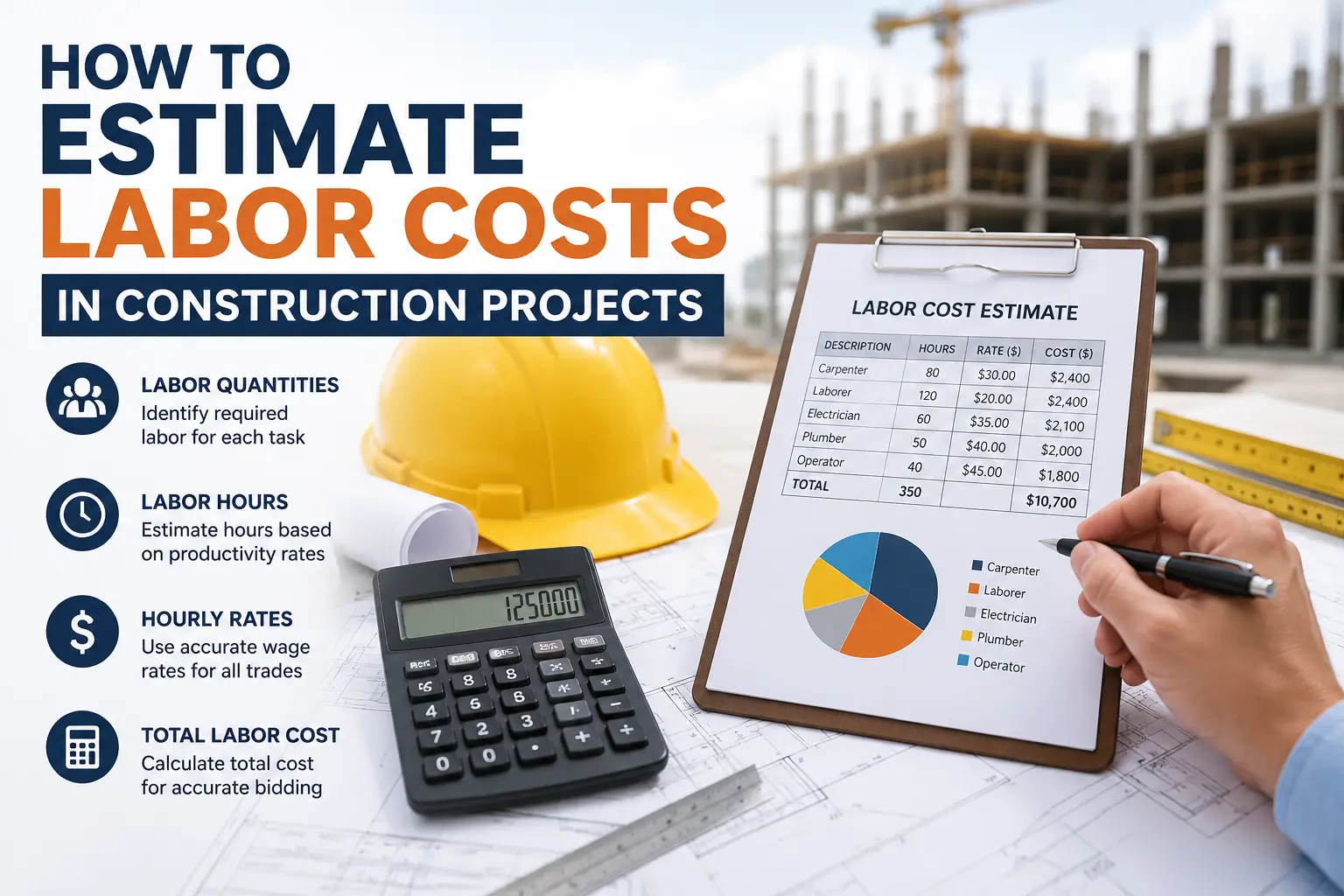
This step involves the determination of exact quantities of various elements that are used in the construction project. For material selection, you must calculate how much of each type of material will be needed. For labor costs, you must estimate the number of workers needed for the construction project. Equipment cost estimation is also important for the increased efficiency of your project.
Selecting suitable material components
This step involves choosing the appropriate materials that align with the plans and specifications of your construction project. This not only includes the physical characteristics of the materials, such as strength, durability, and appearance, but also their compliance with any relevant building codes or safety standards. This step requires a deep understanding of both the project requirements and the properties of various construction materials.
Determining Pricing
After evaluating the respective quantities of materials, one must calculate the final pricing for the chosen materials. This involves assigning monetary benefits to each type of resource based on market trends and values. Not only direct costs, but also indirect costs must be taken into account for better accuracy in construction cost estimation.

Types of Cost Estimates
There are several types of construction cost estimates. Here is the detail of these types!
Preliminary Estimate
A preliminary estimate is the first approximation of project costs, prepared at the pre-construction or feasibility stage before detailed designs are available. The purpose of estimation is to assess project feasibility and affordability and provide a budget range for decision-making and early-stage approval. The accuracy range is between 20% to 50%, depending on data quality and project complexity.
Detailed Estimate
A detailed estimate is prepared after the final drawings and specifications are complete. It offers a comprehensive breakdown of all project elements. The main purpose of the estimate is to establish the final project budget and prepare bidding documents and tenders. It also serves as the basis for cost control and progress payment. The accuracy range lies between 5%-10%.
Quantity Estimate
It involves a systematic measurement and calculation of all materials, labor, and equipment needed for the project. It focuses on determining the quantities rather than the costs. It is important for forming the basis of detailed and definitive estimates and planning material procurement and resource allocation. It also helps in project scheduling and progress measurement. The accuracy range lies between 1%-5%.
Definitive Estimate
It is the most accurate and complete cost estimate. It is prepared when all design details, construction methods, and site data are finalized. It is essential to set the final construction budget for implementation. It controls cost overruns and provides a basis for contracts, financing, and cost management systems. The accuracy range lies between 1%-5%.
How Do You Calculate Construction Costs?
Calculating construction costs accurately is important for budgeting, bidding, financing, and project management. The process involves estimation of both direct and indirect costs, consideration of design details, and analysis of market trends. Here is the step-by-step guide for calculating the construction estimates.
Define Project Scope
The first step in calculating construction costs depends on defining the project scope. The project scope consists of determining the type of project, such as residential, commercial, industrial, and infrastructure, and the size and dimensions of the floors and the site. Existing plans and specifications for buildings should be an immediate resource for creating and reviewing a scope of work. These documents are essential for gathering information, including drawings, the materials and products used, installation methods, and quality of work. Plans are instrumental to the scope of work and the construction estimate. One must understand design specifications and the project timeline.
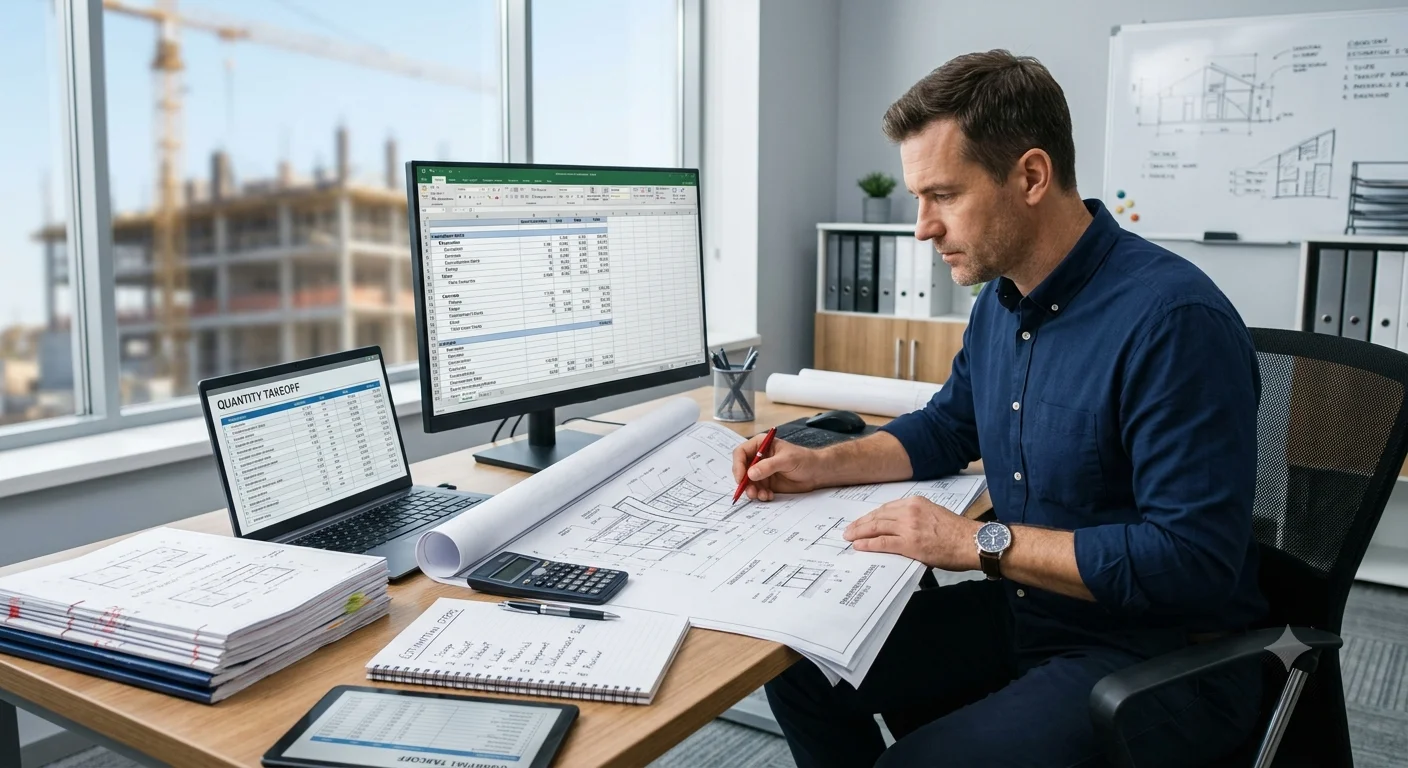
Prepare Quantity Takeoffs
Quantity takeoff, also known as Material takeoff, is the process in which the estimator compiles a list of every material, piece of equipment, and labor rates that are needed to complete the project. It also determines how much of each material, component, and labor input is needed. One must extract quantities from drawings and blueprints. Use software like Revit or AutoCAD to measure areas and lengths. For some projects, like repairs and replacements-in-kind, the takeoff list might be relatively short. But for larger projects and new construction, the list can be tough to tackle. The quantification of items includes steel, concrete, finishes, bricks, and MEP systems.
Assigning Unit Costs
After preparing the quantity takeoffs, the next step is to assign unit costs to each item. Obtaining pricing can be a daunting task, thereby leading to cost inaccuracies. Precise pricing can be obtained by researching suppliers, analyzing historical data, conducting market surveys, getting quotes from vendors and subcontractors, and developing standard cost databases based on published cost data.
Utilizing upgraded cost data will help ensure price accuracy in quantity takeoffs. First, you must have a clear understanding of all costs involved, including labor, materials, equipment and productivity rates, and location factors. For your ease, you can categorize costs into sections, including direct and indirect costs.
All costs included in a construction estimate fall into one of two categories: direct costs and indirect costs. Direct costs are linked to the physical construction of a project. On the other hand, indirect costs are non-physical and non-tangible ones in the project.
Get In Touch With Us Today For More Details
Calculating Direct Costs
After working on the pricing, it is important to calculate the direct costs. For determining the direct costs, multiply each quantity by its unit rate. The direct costs include labor, equipment, material selection, and subcontractor work.
Adding Indirect Costs
Soft costs are not directly related to physical construction, but these costs are essential for project completion. These costs include design, engineering fees, permits, and inspection fees, insurance, bonds, project management, temporary facilities, and security costs.
Calculating all costs
Besides soft costs, one must add contingencies which cover unexpected changes or cover. Design contingency must be accounted for incomplete design. Construction contingency is used for unpredictable site conditions. Also, add escalation and inflation. For accuracy, you must add profit and the contractor’s overhead. Combine all these aforementioned costs and get the final construction estimate.
Review & Validate Estimates
Every estimate should be cross-checked with past project data for accuracy. Estimators and contractors should use every data source available to them, including old estimates, subcontractor quotes, vendor quotes, and published construction cost data. Also, conduct value engineering to identify potential savings.
However, all cost information must be validated with common sense. Every estimate must be scrutinized before it is submitted.
Common Cost Estimation Problems
Various issues can arise while estimating construction costs. Here is the detail of these problems!
Unclear project scope
Unclear project scope also causes inaccurate cost estimation. If the project requirements, specifications, and deliverables are not fully defined, key costs may be overlooked.
Insufficient data
Estimators often rely on outdated, incomplete, or unreliable data costs. If the cost databases do not reflect current market conditions, the estimates can be unrealistic, leading to underestimation or overestimation of project costs.
Ignoring risk management
Many estimators do not include contingency allowance for risk, uncertainties, and unforeseen events. Failure to quantify potential risks like price escalation, regulatory changes, and equipment failure can lead to budget shortfalls.
Inadequate Expertise
Calculating the costs precisely is not everyone’s cup of tea, as it demands expertise and industry knowledge in the long run. If the estimators lack technical experience, they can overlook critical cost components, leading to logistical and procurement issues.
Sudden changes in market conditions
Sudden changes in market conditions can cause a lot of problems, ranging from supply shortages and economic fluctuations, thereby drastically altering construction costs. Volatility in the market affects the prices of materials, labor availability, and interest rates.
Lack of standardized estimation methods
Different estimators use inconsistent methods for calculating the construction costs. Without a standardized framework, estimates can vary widely for the same scope.
Communication gaps
Poor coordination between stakeholders, including contractors, subcontractors, and designers, causes misalignment in project scope and cost estimation. If the estimators are not updated and fully equipped with the proper knowledge and expertise, it is possible that cost estimates would become outdated.
Poor documentation
Insufficient documentation of data sources, assumptions, and estimation methodologies can cause problems in accurately estimating the costs. Without clear traceability, it is difficult to properly review and audit cost estimates.
Why Use Cost Estimating Software?
Construction estimating software can help streamline the process of creating a construction estimate by automating some aspects. Software is also helpful in calculating and tabulating the costs, but a talented estimator knows of construction projects, prices, processes, and productivity rates that dictate which costs are entered into the software.
In any case, construction estimating software has greatly reduced the burden faced by estimators—and it has made it easier to make small adjustments without having to manually recalculate entire projects.
Here are a few ways that estimator software supports the construction estimating process:
- Automated takeoffs powered by machine learning tools can automatically determine the quantity of materials needed by project drawings and documents.
- Computer calculations reduce human error and enable estimators to make small changes to costs to bring accuracy to the projects.
- Productivity increases for estimators using software, as they can focus on the human aspects of estimating rather than the manual aspects.
- Along with other construction management software, estimating software is key to increasing productivity.
- By using the software, the contractors can win more bids, secure funding, and gain a competitive edge in the construction industry.

Are You Looking For an Expert Company for Estimating Construction Costs?
Are you looking for a professional company to estimate all direct and indirect costs associated with your construction project? Look no further than Cost Estimator. We are the best construction cost estimating companies in the town. At Cost Estimator, we specialize in delivering all types of construction costs by breaking down the items with cost projections. Our estimators possess years of cost estimating expertise and knowledge in the construction industry. They carefully analyze the market trends and offer the best possible cost estimations while eliminating the chances of inaccuracies and cost issues. They also help in managing the budget by using cutting-edge software. If you are wondering about the details regarding the project costs, contact us now for a precise estimation.
Conclusion
No one denies the importance of calculating construction costs for construction projects. Construction cost estimating is defined as the process of calculating all the required costs for all kinds of construction projects. All the associated costs, including direct and indirect costs, are taken into account for cost estimating construction.
If you are looking for a reputable estimating firm to help you with soft cost estimations, Cost Estimator is the right firm. To explore further services, contact us or visit our website.
FAQ
What are the benefits of construction cost estimates?
Accurate cost estimates help ensure the financial stability of the project, guide budget planning, support competitive bidding, and reduce cost overruns and inaccuracies.
What are the key components of a construction cost estimate?
- Direct costs
- Indirect costs
- Soft costs
- Contingencies
- Allowances
Who is responsible for preparing construction cost estimates?
Construction cost estimating is usually prepared by project managers, quantity surveyors. In the small projects, contractors or subcontractors may handle the estimates.
What software is used for cost estimating?
Estimators often use cutting-edge tools and software, including CostX, RSMeans, Revit, PlanSwift, Bluebeam, and Buildertrend.
What factors are responsible for affecting project costs?
- Project size and complexity
- Market fluctuations
- Location and site conditions
- Project schedule and duration
- Design changes
- Regulatory approvals